Was There an Ancient Nuclear War?
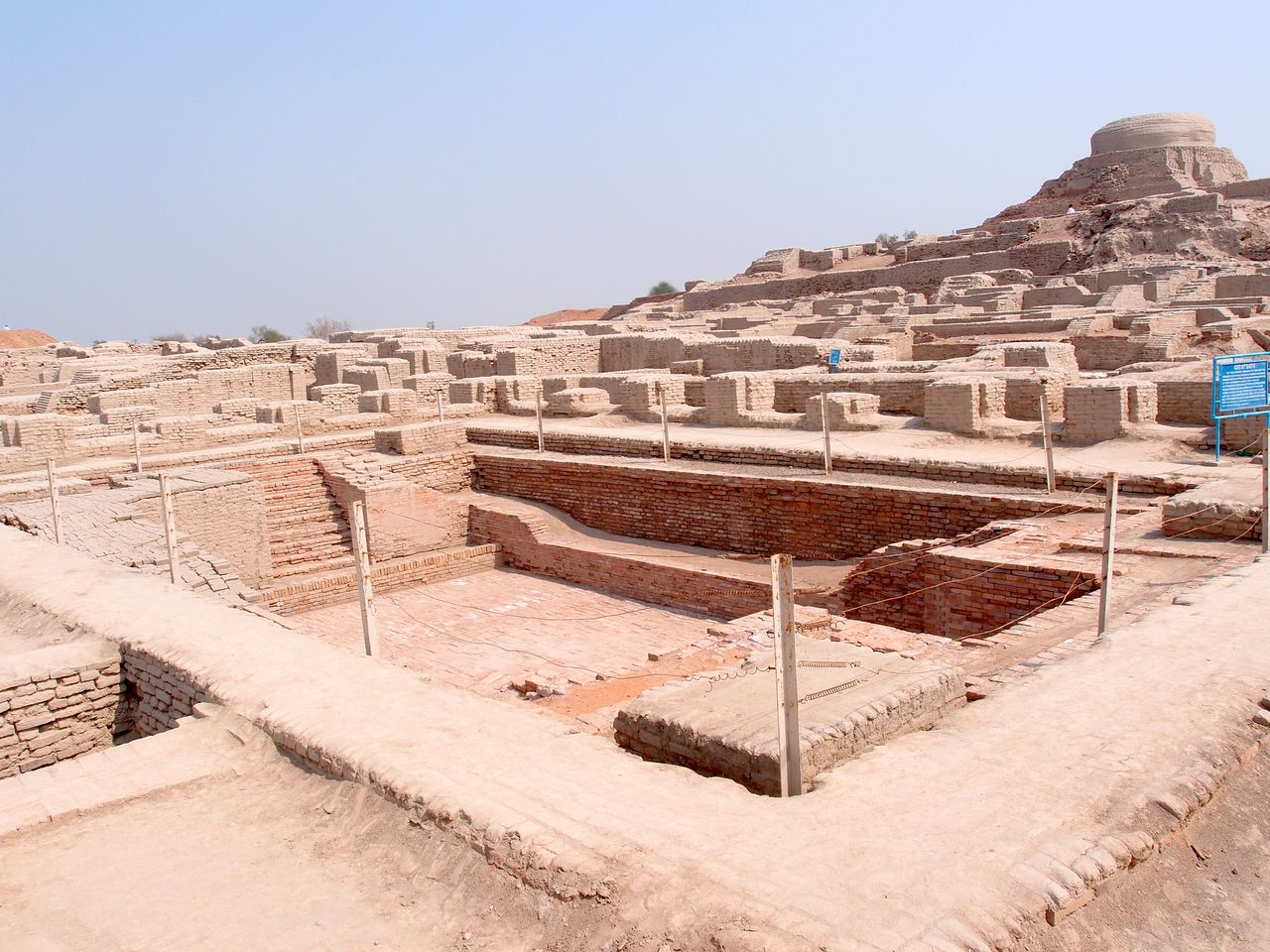
A 1979 book took the fire weapons of the Mahabharata, pointed at a real ruined city in Pakistan, and called it ground zero. The epic is real. The city is real. The radiation reading everyone quotes was never published by anyone. Here is the file, opened claim by claim, every one wearing its evidence.
The Mahabharata describes weapons that fall out of the sky and burn everything beneath them. That part is not fringe at all. The passages are there, inside one of the longest poems any civilization has produced, and they have been copied, recited, and argued over for a very long time. What is fringe is what a 1979 book by Davenport and Vincenti did with them: it read those weapons as literal atomic devices and turned the excavation reports of a real city in what is now Pakistan into its physical evidence. The epic is real. The city is real. The question is whether anything nuclear ever happened at either of them, and unusually for this genre, that question has a clean laboratory answer. The flying machines those same epics describe have their own file at Vimanas: Flying Machines in the Ancient Epics. This one is about the weapons.
01What the epic actually says
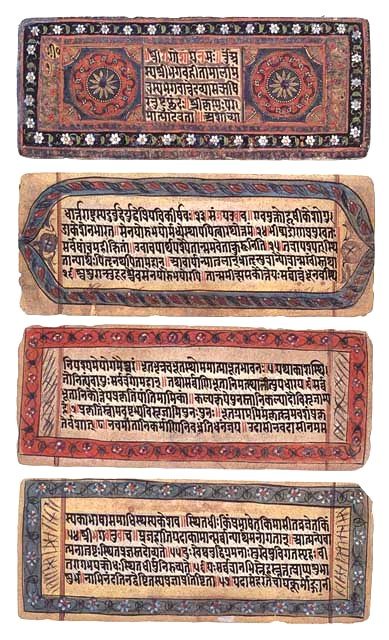
Strip the theory away and a hard core of text remains. The Mahabharata was compiled roughly between 400 BCE and 400 CE and runs to about 100,000 couplets. Inside it are the astras, weapons named and described in detail, among them the brahmastra, which the text renders as intense heat, blinding light, and the scorching of everything in its path, and the pashupatastra. Those passages are genuine. They sit in one of the world's longest epic poems and among the most important documents of Sanskrit literature and Hindu religious tradition.
Here is the distinction the rest of this file turns on. The Mahabharata is living scripture for roughly a billion people, and neither the tradition that carries it nor the scholarship that studies it reads the brahmastra as a uranium device. Academic Indologists treat the astras as literary and mythological descriptions inside a religious epic, which is the frame van Buitenen's translation and Hiltebeitel's Rethinking the Mahabharata work within. The nuclear reading is a modern Western overlay, an ancient-astronaut import of the twentieth and twenty-first centuries, and it belongs to Davenport and Vincenti and the media that amplified them. What follows tests their claim. It does not test the scripture.
02The real city under the theory
Mohenjo-daro is not a legend, and it is not a ruin nobody studied. It was dug in the 1920s and the 1930s, and the people who dug it published what they found, in volumes you can still open.
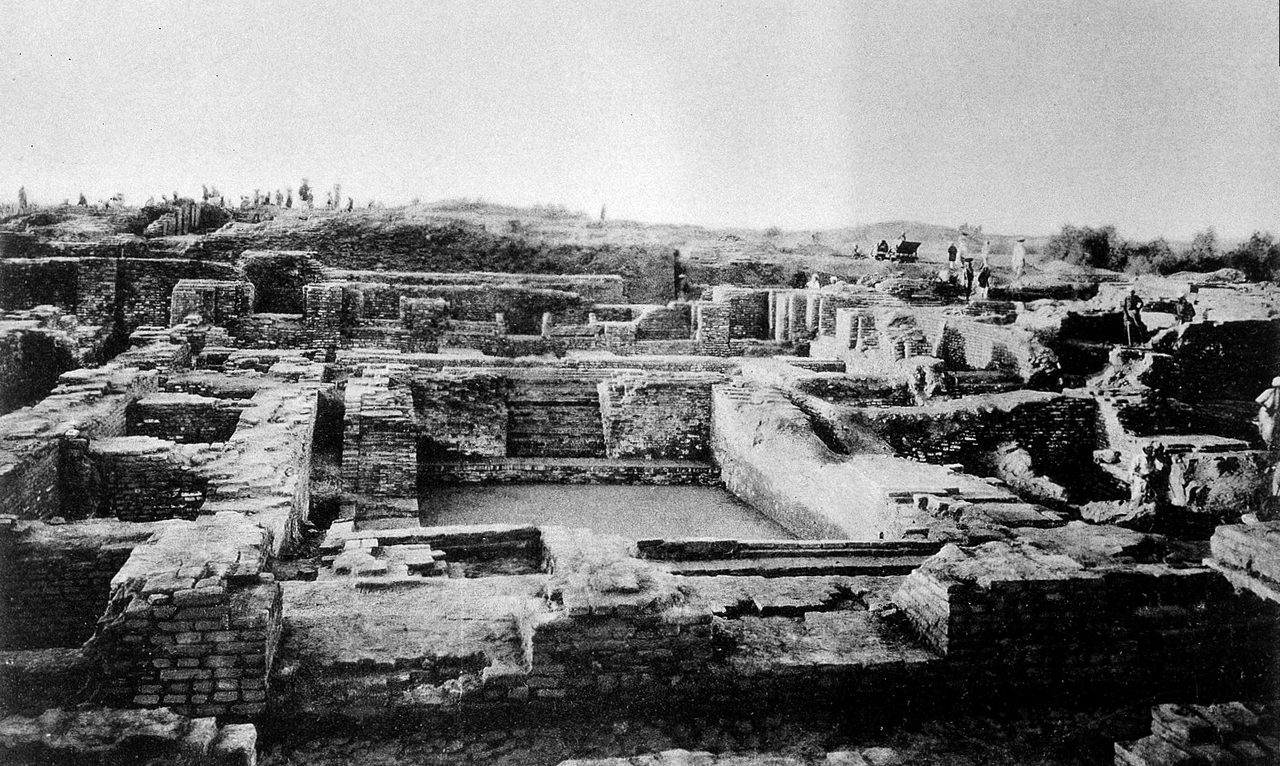
Mohenjo-daro, in Sindh, Pakistan, was a major city of the Indus Valley Civilization, occupied from roughly 2600 to 1900 BCE, with an estimated peak population of 30,000 to 40,000. That made it one of the largest cities of its era. R.D. Banerji began excavating it in 1922 and John Marshall ran the work through the 1920s and 1930s. What the trenches showed was gradual decline: periodic Indus River flooding, infrastructure that deteriorated, and an abandonment that unfolded across several centuries. Not one catastrophic night.
| Line of evidence | What it shows |
|---|---|
| Stratigraphy | deterioration layered over centuries, with no single destruction horizon |
| Civic infrastructure | grid streets, drains, and the Great Bath, with maintenance declining late |
| Climate | a weakening Indian Summer Monsoon |
| Rivers | the Ghaggar-Hakra system drying |
| Trade | disruption of exchange with Mesopotamia |
| Society | possible epidemic disease and internal social reorganization |
The engineering at Mohenjo-daro is genuinely impressive: a street grid, a drainage system, the Great Bath. In the later phases that same engineering shows declining maintenance, which is what sustained societal stress looks like in the ground. The ruins are stratified deterioration accumulated over centuries. There is no single-event destruction horizon anywhere in them.
Why the Indus Valley Civilization declined around 1900 BCE is a live research question with a broadly agreed shape: it was multicausal. Climate change weakened the Indian Summer Monsoon. The Ghaggar-Hakra river system dried. Trade with Mesopotamia was disrupted. Epidemic disease is possible and internal social reorganization is likely. It is a slow, tangled ending that specialists still argue about, and none of the arguing is about a bomb.
03The forty-four skeletons
Every telling of this story arrives, sooner or later, at the bodies. Figures caught in the street, killed where they stood, still hot with radiation when the archaeologists lifted them out. That image is what sells the theory. Here is the excavation record instead.
About 44 skeletons have been recovered across the whole of Mohenjo-daro. Most came from upper stratigraphic levels, meaning they postdate the city's main occupation rather than marking its end. Many carry cut marks, the signature of person-on-person violence during a city's decline, not of one instant of mass death. George Dales took the massacre story apart systematically in 1964, in a paper he called 'The mythical massacre at Mohenjo-daro,' by showing that the bones were scattered across space and across time.
The radiation number attached to those bones is the single most repeated line in this entire subject, so it gets its own section below, and a proper autopsy.
04The test that would settle it in an afternoon
This is what makes the ancient nuclear claim unusual, and unusually easy to check. Most arguments in this territory end in a standoff over interpretation. This one does not have to, because a nuclear detonation leaves a chemical fingerprint that nothing else on this planet leaves, and we know exactly what it looks like, because we made one and then studied the ground. There is one honest complication, and it belongs at the front of the section rather than buried in it: parts of that fingerprint fade. So the real question is not only what a bomb leaves, it is what would still be legible four thousand years later.
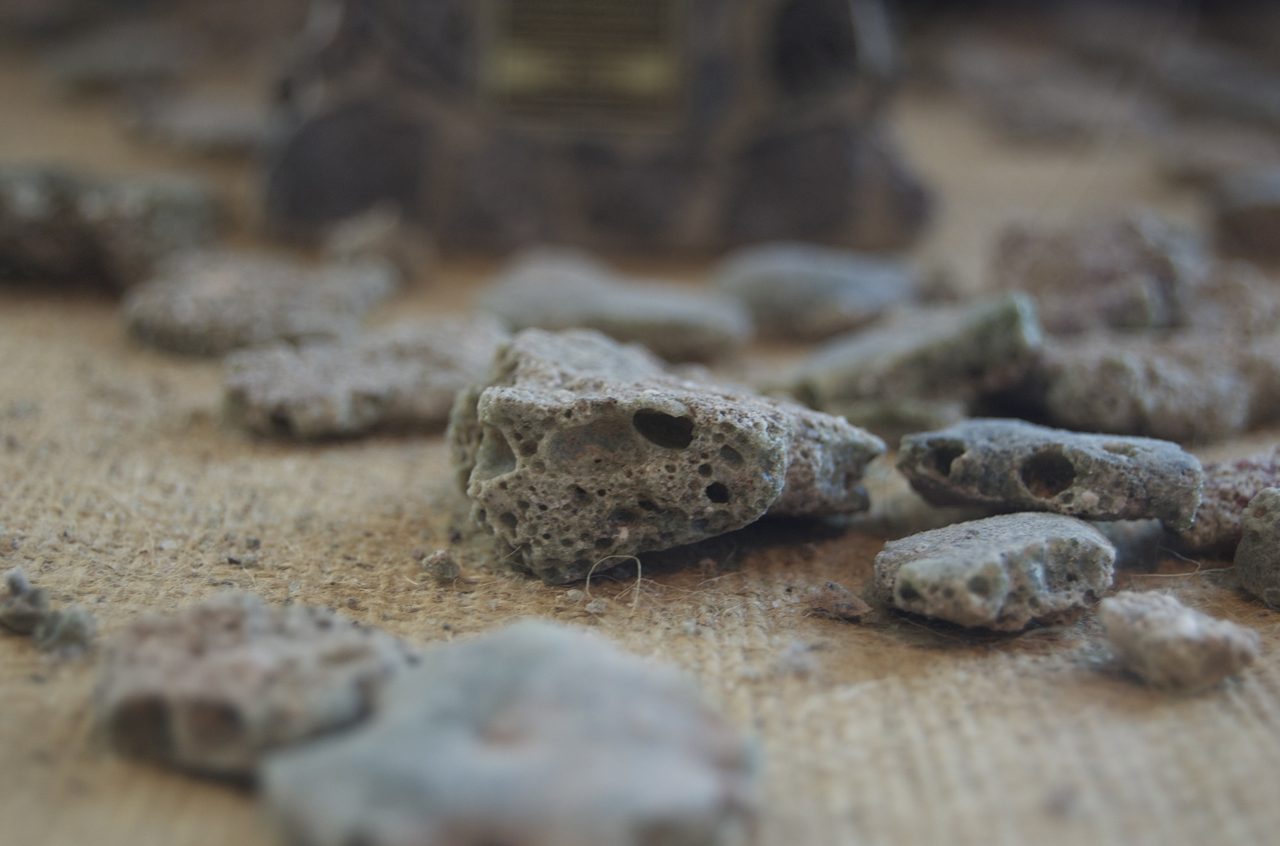
The Trinity test of July 16 1945, in New Mexico, fused the desert surface into a glass we call trinitite at temperatures above 1,500 degrees C. Trinitite carries characteristic radioisotopes: Cs-137, Sr-90, Pu-239. Those isotopes are entirely absent from Libyan Desert Glass and from every ancient vitrified material ever examined. That is not a matter of opinion or of interpretation. It is a definitive chemical test for nuclear origin.
Now put that test under the pressure it deserves, because the three isotopes do not carry equal weight across four thousand years, and pretending otherwise would be exactly the sloppiness this file exists to correct. Cs-137 and Sr-90 have half-lives of about thirty years each. Over the four millennia since the date the theory itself names, that is more than a hundred halvings, so both would be undetectable at a Bronze Age site whether or not anything ever detonated there. Their presence is what makes 1945 trinitite unmistakable. Their absence at Mohenjo-daro is worth precisely nothing as an argument. Pu-239 is the different one: its half-life runs to about twenty-four thousand years, so nearly all of any that was ever made would still be sitting in the ground, waiting for an instrument. Nobody has found any at Mohenjo-daro, or at any other site nominated as an ancient ground zero. And the other marker that survives is not an isotope at all. The radiation damage a detonation writes into the crystal structure of the minerals around it is a structural scar rather than a decaying clock, so elapsed centuries do not sweep it out of the record the way they sweep out Cs-137.
Nuclear detonations also leave specific measurable isotopic signatures and characteristic radiation damage patterns in crystalline materials. No such signature has ever been detected at any ancient site alleged to have experienced nuclear warfare. Modern instruments detect even trace nuclear contamination, routinely, which is why the absence at these sites is not a shrug but a result.
| A nuclear detonation leaves | Present at Mohenjo-daro or any claimed site |
|---|---|
| Fused surface glass carrying Pu-239, which barely decays in four thousand years | no |
| Radiation damage patterns in crystalline materials, a structural scar rather than a decaying isotope | no |
| A clearly defined blast center | no |
| Instantaneous structural collapse | no |
| Cs-137 and Sr-90 fallout, measurable for decades | no, and it would be absent either way: both are gone within a few centuries |
We also know what the aftermath looks like at scale, because there are real sites: Trinity, the Nevada Test Site, Semipalatinsk. Each shows instantaneous structural collapse, a clearly defined blast center, radioactive fallout measurable for decades, and glassy fusion of the surface with radioisotopes locked inside it. Not one of those signatures exists at Mohenjo-daro, or at any other site anyone has proposed as an ancient ground zero.
Five things a bomb cannot help leaving. One of them, the short-lived fallout, would have faded on its own by now and settles nothing in either direction, and this file counts it out rather than counting it in. The other four would still be there four thousand years on. Not one of them is. That is the part of the argument no amount of textual reinterpretation can reach, because the instruments do not care what the poem says.
05Vitrified, but not by anything nuclear
The theory's second pillar is melted material: fused pottery at Mohenjo-daro, glassy stone at other sites, natural glass in the Egyptian desert. Melting is real. The temperature required for it is the whole argument, and the temperature required for it is not remotely nuclear.
Ceramic fragments from Mohenjo-daro with vitreous surfaces are consistent with over-fired pottery and kiln waste, which is an ordinary byproduct of ceramic production found at virtually every ancient urban site that had kilns. Fringe sources rename them 'fused ceramics' and the phrase does the work the evidence cannot. They are potters' rejects.
Stone vitrification needs only ordinary combustion temperatures. As documented at the Scottish vitrified forts, it happens between 1,000 and 1,200 degrees C, which sustained wood or charcoal fires confined inside stone walls reach without difficulty. And here is the line that matters most, because it reaches wider than the handful of sites this theory nominates: no vitrified ancient site anywhere on Earth, claimed as a ground zero or not, shows a radiation signature. Not one.
One more comparison gets dragged in, and it deserves a straight answer. Libyan Desert Glass, the yellowish-green natural glass of the Western Desert of Egypt and Libya, is real and has been chemically analyzed for decades. It is attributable to an asteroid or comet airburst or a large meteorite impact, not to human technology, and the ancients prized it: Tutankhamun's pectoral scarab is carved from it. Its full story, including the source crater nobody has confirmed, is a file of its own at Tutankhamun's Cosmic Glass.
06Five claims, and what happened when someone checked
Strip the ancient nuclear war theory down to what actually holds it up and there are five load-bearing claims. Each one is admirably specific, and a specific claim is a checkable claim. All five have been checked.
The famous figure, skeletons reading 50 times normal radiation, has no published measurement behind it. It originates with Davenport and Vincenti in 1979 and has been repeated ever since without anyone verifying the primary source, because there is no primary source: no radiation measurements of those skeletons were ever published in the archaeological literature. The original excavators, Marshall and Mackay, recorded no such observation. And Kenneth Kennedy's comprehensive reanalysis of all Indus Valley skeletal material, published in 2000, found no evidence of radiation exposure at all.
The second claim is a highly radioactive area near Jodhpur, in Rajasthan, sometimes upgraded in the retelling to an ancient crater. No published geological or radiometric survey supports it. Indian geological survey data show no anomalous radiation in the cited region. The claim appears to originate on internet forums and has never once appeared in peer-reviewed literature. Nobody has ever needed to disprove this crater, because nobody has ever produced it.
The third is an epicenter. Fired pottery and kiln debris exist at Mohenjo-daro, as at any ancient city that made pots, but the claim of a distinct vitrification epicenter with destruction radiating outward from it has no basis in the published excavation reports. It is not in Marshall's 1931 volume. It is not in Mackay's 1938 volume. The pattern that would make the site look bombed was added afterwards, by writers who were not there.
The fourth is the book itself. Davenport and Vincenti's 2000 a.C.: distruzione atomica has no peer review and contains no primary radiation data. It misrepresents the excavation reports it leans on, and it has been rejected by every mainstream Indologist and archaeologist who has examined it. It survives entirely inside fringe and ancient-astronaut media, which is where it has done nearly all of its work.
| The claim | Where it came from | What happened when someone checked |
|---|---|---|
| Skeletons reading 50 times normal radiation | Davenport and Vincenti, 1979 | no radiation measurement of them was ever published; Kennedy's 2000 reanalysis found no radiation exposure |
| A radioactive ancient crater near Jodhpur | internet forums | no published geological or radiometric survey supports it; Indian geological survey data show no anomalous radiation |
| A vitrification epicenter with destruction radiating outward | fringe retellings of the dig | absent from Marshall's 1931 and Mackay's 1938 excavation reports |
| An atomic destruction in 2000 BCE, argued as scholarship | Davenport and Vincenti, 1979 | no peer review, no primary radiation data, misrepresents the excavation reports, rejected by mainstream scholarship |
| Oppenheimer's Gita line as an admission | conspiracy circles and ancient-astronaut media | he was quoting scripture about his own work, not citing a historical precedent |
07The Oppenheimer misreading
The fifth claim is the one that travels furthest, because it sounds like a confession from the one man on Earth in a position to make one.
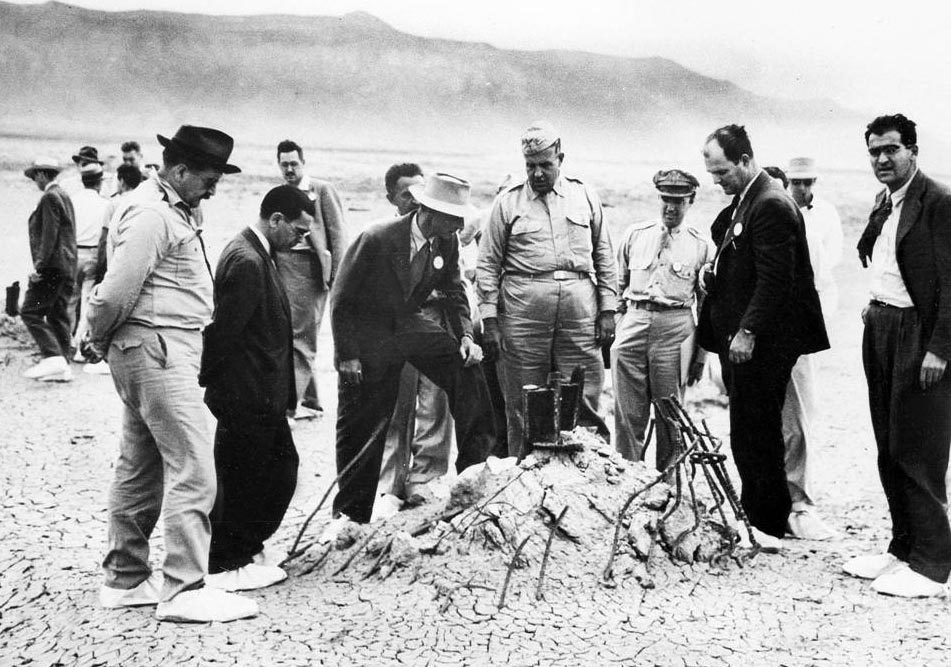
'Now I am become Death, the destroyer of worlds.' J. Robert Oppenheimer attached that line from the Bhagavad Gita to the Trinity test and recounted it publicly in 1965, and in conspiracy circles it has been laundered into an admission that he knew about ancient nuclear weapons. It is a profound misreading, and not a subtle one. Oppenheimer was a physicist reaching for a religious text to weigh the moral mass of what he had just built. He was not referencing a historical precedent. A modern man quoting scripture is evidence about the modern man, and about the scripture's power over him, and about nothing at all that happened in the Bronze Age.
08What could have burned instead
If the astras were not atomic, what were the poets working from? The honest answer has two halves, and neither of them requires a lost technology.
Academic Indologists take the epic seriously as a historical document, just not the way the ancient-astronaut writers do. The mainstream reading is that the Mahabharata preserves memories of real conflicts in the Late Vedic period, embellished across centuries of oral and then written transmission. On that reading the astra descriptions may be mythologized versions of Bronze Age warfare technologies, fire arrows and incendiary substances, amplified poet by poet through the conventions of epic poetry. Exactly the same amplification is visible in Homer's Iliad and in every other epic tradition that has been studied.
And the fire in those descriptions never needed inventing. Historical armies really did field devastating incendiary weapons: Greek fire in Byzantine hands, fire arrows, naphtha-based projectiles, heated sand, burning pitch. Locally these things were catastrophic. They are a completely sufficient physical basis for a poem about a weapon that burns everything under it.
Zoom out and the pattern gets hard to ignore. Other ancient Near Eastern texts do the same thing: the Lament for Ur, Inanna's weapons of fire and storm. Devastating weapons and divine destruction are a standard rhetorical convention of Bronze Age epic rather than a technical report, and the same amplification recurs in Norse sagas, Chinese classics, and Egyptian pharaonic accounts. If a description of a sky-weapon proves an ancient nuclear arsenal, then half the literate world had one.
09Fire from the sky, the one mechanism that is real
There is a genuine way for an ancient landscape to be flattened and scorched by something out of the sky, and it has nothing to do with uranium.
Cosmic airbursts are real. Tunguska demonstrated in 1908 what one can do to a landscape, and the proposed Younger Dryas impact hypothesis argues for effects on a far larger scale. An airburst delivers intense heat and blast across a wide area with nothing human involved, so an ancient one could in principle have seeded mythological accounts of sky-borne weapons. What nobody can do is connect a specific myth to a specific event. That step is speculation and should be labeled as such. The impact case has a fuller file of its own at The Younger Dryas Impact.
The most cited test case for that idea has since collapsed. In 2021 Bunch and colleagues proposed that Tall el-Hammam in Jordan was destroyed by a cosmic airburst around 1650 BCE, citing intense heat, melted pottery, and shocked quartz. Scientific Reports retracted the paper on April 24 2025, for errors in analyses, data, and methods. The claim no longer rests on a peer-reviewed publication, and it is worth noting what it would have shown even at full strength: a cosmic destruction mechanism, never a nuclear one.
10What is genuinely still open
Refusing the nuclear story does not close the file on the Indus Valley. Three real questions stay open, and not one of them needs a bomb to be interesting.
Whether the Mahabharata preserves genuine but heavily distorted memory of real Late Bronze Age events, devastating fires among them, is neither provable nor disprovable with the evidence we currently have. It is not a silly question either. Oral traditions elsewhere have been shown to carry accurate geographical and environmental information for up to about 10,000 years.
The Indus Valley Civilization was long characterized as unusually peaceful on the strength of an apparent absence of military architecture. Some recent reassessments push back, pointing to fortifications and weapon caches. Whether organized warfare on any scale contributed to the urban decline is still genuinely debated among specialists of the civilization.
And the civilization's own writing is still shut. The Indus script remains undeciphered, and it might carry information about military conflict or catastrophic events that would change the picture. Until it is read, if it is even a true writing system, that source stays out of reach.
Fast Facts
- Site
- Mohenjo-daro, Sindh, Pakistan
- City occupied
- roughly 2600 to 1900 BCE, peak population about 30,000 to 40,000
- Excavated by
- R.D. Banerji from 1922, John Marshall through the 1920s and 1930s
- Skeletons recovered
- about 44 across the whole site, mostly in upper levels, scattered in space and time
- Radiation measurements published
- none for these skeletons, and no nuclear signature detected at any claimed ancient site
- Source of the nuclear reading
- Davenport and Vincenti, 2000 a.C.: distruzione atomica, 1979
- The chemical test
- the trinitite signature: Cs-137, Sr-90 and Pu-239 fused into surface glass
- What still reads after 4,000 years
- Pu-239, which barely decays, and radiation damage in crystal; Cs-137 and Sr-90 fade regardless
- Found in any ancient vitrified material
- no, anywhere on Earth
- The Rajasthan crater
- no published geological or radiometric survey has ever found it
- Oppenheimer's Gita line
- a physicist weighing his own work, recounted in 1965, not a witness to antiquity
What we can actually stand behind
The texts are real and the city is real. The Mahabharata's astra passages exist and describe the brahmastra as heat and blinding light. Mohenjo-daro was a genuine Indus Valley city of some 30,000 to 40,000 people at its peak, whose excavated record shows centuries of decline, about 44 scattered skeletons, and no destruction horizon. All of that is verified and undisputed.
The explanation that actually fits is literary. Indologists read the epic as preserving embellished memory of Late Vedic conflict, and real incendiary weapons, fire arrows, burning pitch and naphtha, give a fully sufficient physical basis for a poem about weapons that burn. The city's own ending was multicausal: monsoon, rivers, trade, disease, and social change, over centuries.
That the epic carries genuine but heavily distorted memory of some real Bronze Age catastrophe is neither provable nor disprovable right now. Cosmic airbursts are a real mechanism that could in principle sit behind sky-fire myths, though tying any particular myth to any particular event remains speculation, and the one recent paper claiming a Bronze Age city was destroyed by an airburst was retracted in 2025.
There was no ancient nuclear war. No radiation measurement of the Mohenjo-daro skeletons was ever published, and Kennedy's full reanalysis found no radiation exposure. No geological or radiometric survey has ever located the Rajasthan crater. No vitrification epicenter appears in Marshall's 1931 or Mackay's 1938 excavation reports. The Davenport and Vincenti book that started all of it has no peer review, no primary radiation data, and no support from any mainstream Indologist or archaeologist who has read it. And Oppenheimer quoting the Gita was a man measuring his own work against scripture, not testifying about antiquity. The physical test, meanwhile, survives the honest subtraction. Cs-137 and Sr-90 would have decayed away across four thousand years whether or not a bomb ever went off, so their absence settles nothing. Pu-239 barely decays on that timescale, and the radiation damage a blast writes into crystal is a structural scar rather than a decaying isotope. Neither has ever been found in a single ancient vitrified material anywhere on Earth, or at any site anyone has nominated as an ancient ground zero.
So the bomb is gone, and the honest answer is that it was never there. What does not go away is the poem. Someone in the Late Vedic world set down a weapon that flashed, burned, and left nothing standing, and a civilization has carried those lines ever since without ever once needing them to be literal. Oral tradition can hold accurate geography for up to about 10,000 years. So what were the poets working from, if they were working from anything: a city that burned, a sky that caught fire, or the oldest human talent of all, the ability to imagine a weapon far worse than the one in your hand?
Sources & further reading
Everything above is drawn from our research library on Theories of Anything. Open the full files to check the sourcing and go deeper.
Image credits
- The ruins of Mohenjo-daro photograph by Saqib Qayyum, via Wikimedia Commons. CC BY-SA 3.0 Source.
- The Great Bath during the 1920s excavations historical photograph from the Wellcome Library, London, via Wikimedia Commons. CC BY 4.0 Source.
- Trinitite photograph by Benjamin Clark, via Wikimedia Commons. CC BY 2.0 Source.
- Oppenheimer and Groves at Trinity ground zero United States Army Signal Corps, via Wikimedia Commons. Public domain Source.
- Four leaves of a 19th-century Bhagavad Gita manuscript unknown 19th-century North Indian manuscript, Library of Congress collection, via Wikimedia Commons. Public domain Source.
- Card crop of The ruins of Mohenjo-daro photograph by Saqib Qayyum, via Wikimedia Commons. CC BY-SA 3.0 Source.


