How Would You Even Fly One?

Forget the lights and the grainy gun-camera footage for a moment and ask the engineer's question instead: what would a machine actually have to DO to move the way credible witnesses keep reporting? Jump from a hover to sixty miles away in under a second. Hold station with no wings and no exhaust. Cross hypersonic with no sonic boom and no burning air. Slide from open sky into ocean as if the surface were not there. Those are not moods, they are performance figures, and one peer-reviewed estimate puts the implied g-forces in the thousands. No pilot survives that. No airframe survives that. So either the reports are wrong, or the physics involved is stranger than anything we know how to build. This is the honest tour of that second option: warp bubbles that are genuine solutions to Einstein's equations, wormholes general relativity actually permits, an inertial-mass trick the Navy chose to patent, and energy drawn from the vacuum itself. Tier by tier, here is which of it is real physics, which is real research, and which is the overclaim that has never once turned up in a laboratory.
Everyone argues about what UAP are. Almost no one starts where the problem actually is, which is not identity but capability. A light in the sky is a curiosity. A light in the sky that stops dead, reverses, and is gone before the eye can track it is a physics problem, because whatever did that had to obey, or exploit, the same universe the rest of us are stuck in. This dossier takes the reports at their most demanding and asks the only question that matters to an engineer: how would you even fly one?
01The Flight Problem
Start where an aerospace engineer would start, not with what these objects might be but with what they are reported to DO. Strip away the mystery and the mockery, and a specification is left on the table: a set of flight characteristics that recur across the best-documented cases and that no aircraft in any air force can meet. Before a single warp equation, that specification is the whole reason this conversation is serious.
Multiple credible sources, including US Navy pilots, shipboard radar operators, and infrared targeting systems, have documented UAP performance parameters that exceed all known aircraft technology. That single fact is the entire warrant for a propulsion-physics discussion: if the reports are accurate, the objects are doing things our engineering cannot, which forces the question of what physics, known or unknown, would even allow it.
The pattern is not one freak night. In the 2014 to 2015 Roosevelt encounters, Navy pilots reported near-daily contact with objects showing anomalous flight, including the Gimbal rotation, the GoFast object, and craft operating from sea level to above 80,000 feet with no visible means of propulsion. In its 2021 Preliminary Assessment, the Office of the Director of National Intelligence formally logged 18 separate incidents in which observers described UAP accelerating without observable propulsion, moving at considerable speed with no discernible means of doing so, or hovering with no observable means of lift.
The most quoted single number comes from the 2004 Nimitz encounter, where Navy aircrew and shipboard radar tracked a roughly 40-foot object that jumped to a point about sixty miles away in under a second, implying an acceleration in the thousands of g. That figure is not a guess from a forum. A peer-reviewed 2019 paper in the journal Entropy by Kevin Knuth, Robert Powell, and Peter Reali estimated the accelerations implied by several such cases, Nimitz among them, at anywhere from nearly 100 g to several thousand g, with no observed air disturbance, no sonic booms, and no heat commensurate with even the minimum energies involved. The full Nimitz case file, the aircrew accounts, the radar tracks, and the chain of custody on the video, is its own dossier, The Nimitz Tic-Tac. What matters here is only the number, because the number is the specification a real propulsion theory would have to meet.
Line those traits up, hover with no lift, instant acceleration, hypersonic silence, air-to-water travel, and you have the recurring performance profile the disclosure era catalogs as the Five Observables, which a companion dossier, The Five Observables, lays out in full. This article does not re-argue that profile. It asks the next question. A human body pulling a few thousand g is no longer a body, and an airframe doing the same is confetti. So a serious propulsion theory has exactly one job: either make the g-forces disappear, or make the mass that feels them so small the craft shrugs them off. Every framework below is an attempt at that one job, and they range from published general relativity to claims that have never left the page.
02The Warp Bubble Is Real Mathematics
The most developed idea does not try to push a craft through space at all. It moves space instead. And it is not fringe: it started with a working solution to the equations of general relativity, published in a mainstream physics journal, that no one has since been able to knock down.
In 1994, the Mexican theoretical physicist Miguel Alcubierre, of the National Autonomous University of Mexico, published a landmark paper, 'The Warp Drive: Hyper-Fast Travel Within General Relativity,' in the journal Classical and Quantum Gravity. It showed that general relativity permits a specific spacetime geometry, a 'warp bubble,' that contracts space ahead of a craft and expands it behind, carrying the craft along at an effectively faster-than-light speed while the craft itself never locally exceeds the speed of light inside its own bubble.
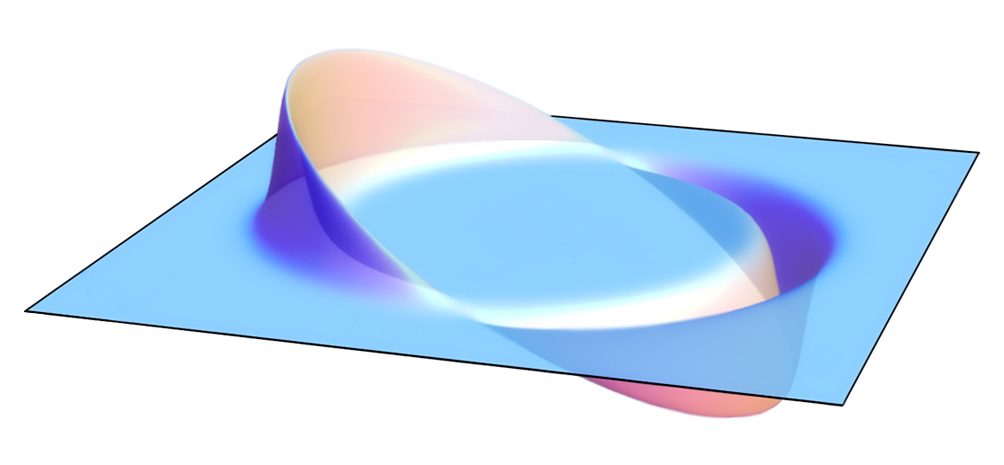
There is a catch, and it is a large one. The original Alcubierre solution requires negative energy density, commonly called exotic matter, to hold the bubble open. Negative energy is not science fiction: quantum field theory allows it, and the Casimir effect is a real, measured example of it. But it has never been produced in macroscopic quantities, and a warp bubble would need an enormous amount of it. That gap, between a substance that exists at the quantum scale and the bulk of it a spacecraft would require, is the entire practical problem with warp drive.
The requirement may not be as hopeless as it first looked. Harold 'Sonny' White, working at NASA's Eagleworks laboratory and later at the Limitless Space Institute, showed that changing the warp bubble's geometry from a flat shell to a toroidal, doughnut-like shape could cut the exotic-matter requirement by many orders of magnitude, in principle bringing it down toward achievable scales rather than astronomical ones. It did not build a warp drive. It moved the target from impossible to merely enormous.
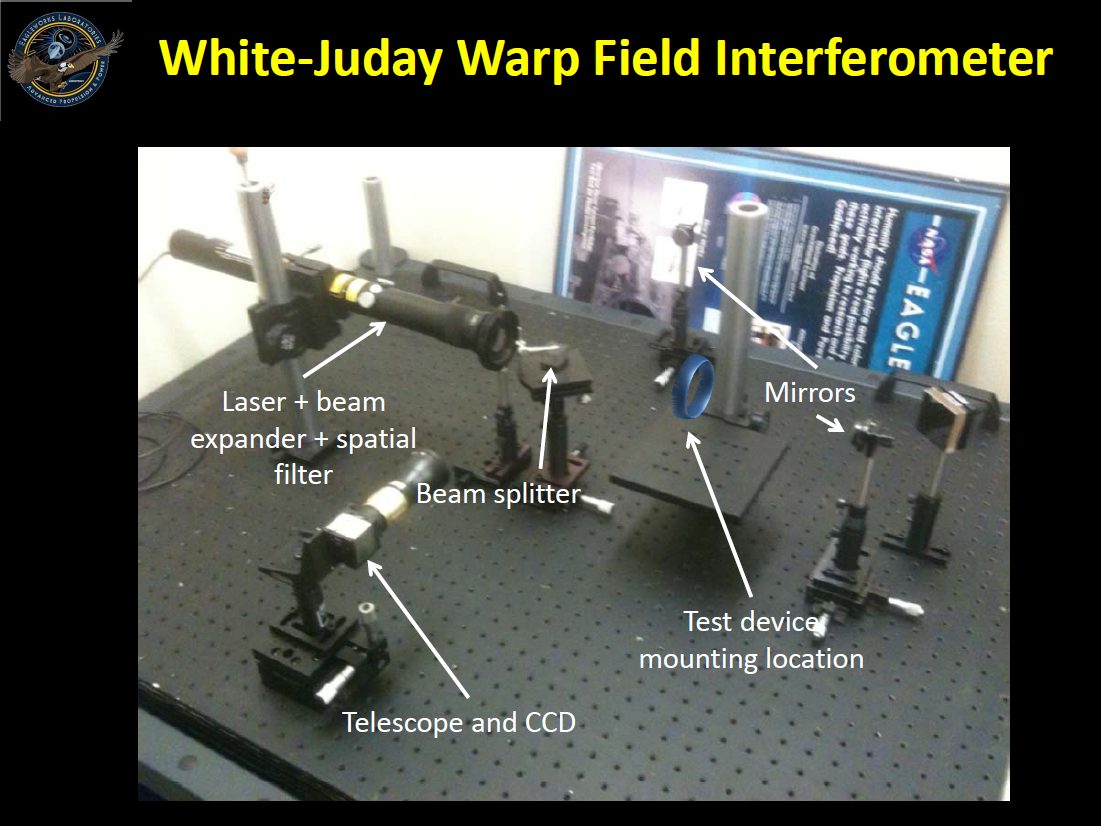
Keep the status exactly straight, because this is where honest discussion usually goes wrong. The Alcubierre metric is a valid solution of Einstein's field equations. The physics is not speculative in principle. What is far beyond current capability, perhaps permanently, is the engineering: producing and controlling exotic matter in the quantities and configurations the geometry demands. Allowed by the equations and buildable by humans are two very different claims, and only the first is settled.
03Wormholes, and the Rest of the Toolkit
Warp drive is the famous one, but it is not alone. General relativity turns out to be surprisingly permissive about exotic geometries, and several other routes to the same destination have been worked out with the same rigor, and run into the same wall.
The best known alternative is the traversable wormhole. In 1988, Michael Morris and Kip Thorne demonstrated, in the American Journal of Physics, that general relativity permits a wormhole a craft could actually pass through, a shortcut connecting two distant regions of spacetime, provided exotic matter holds its throat open. Their paper, 'Wormholes in Spacetime and Their Use for Interstellar Travel,' was written partly as a teaching tool, and it made the crucial point plainly: the open question is engineering, not fundamental physics.

Kip Thorne is one of the two theorists this whole article leans on, and the shape of his and Morris's result is worth pausing on, because it repeats for every framework here. They did not prove wormholes exist, or that anyone can make one. They proved that nothing in our deepest, most tested theory of gravity forbids one, and then handed the entire difficulty to the engineers in the form of a single impossible-seeming material requirement. That is the honest pattern under all the excitement. Warp bubbles, wormholes, and their cousins do not fail in the mathematics. They fail at the same practical door, the one marked exotic matter, and none of them has ever been walked through.
Wormholes have company. Physicists exploring high-speed and faster-than-light travel within general relativity also study Krasnikov tubes, which effectively shorten a round trip by modifying spacetime along a craft's path, and the Van den Broeck modification, which shrinks the amount of exotic matter a warp bubble needs by hiding a large interior volume behind a microscopically small surface. These are alternative approaches to the same goal, each a legitimate exercise in metric engineering rather than a blueprint anyone can follow.
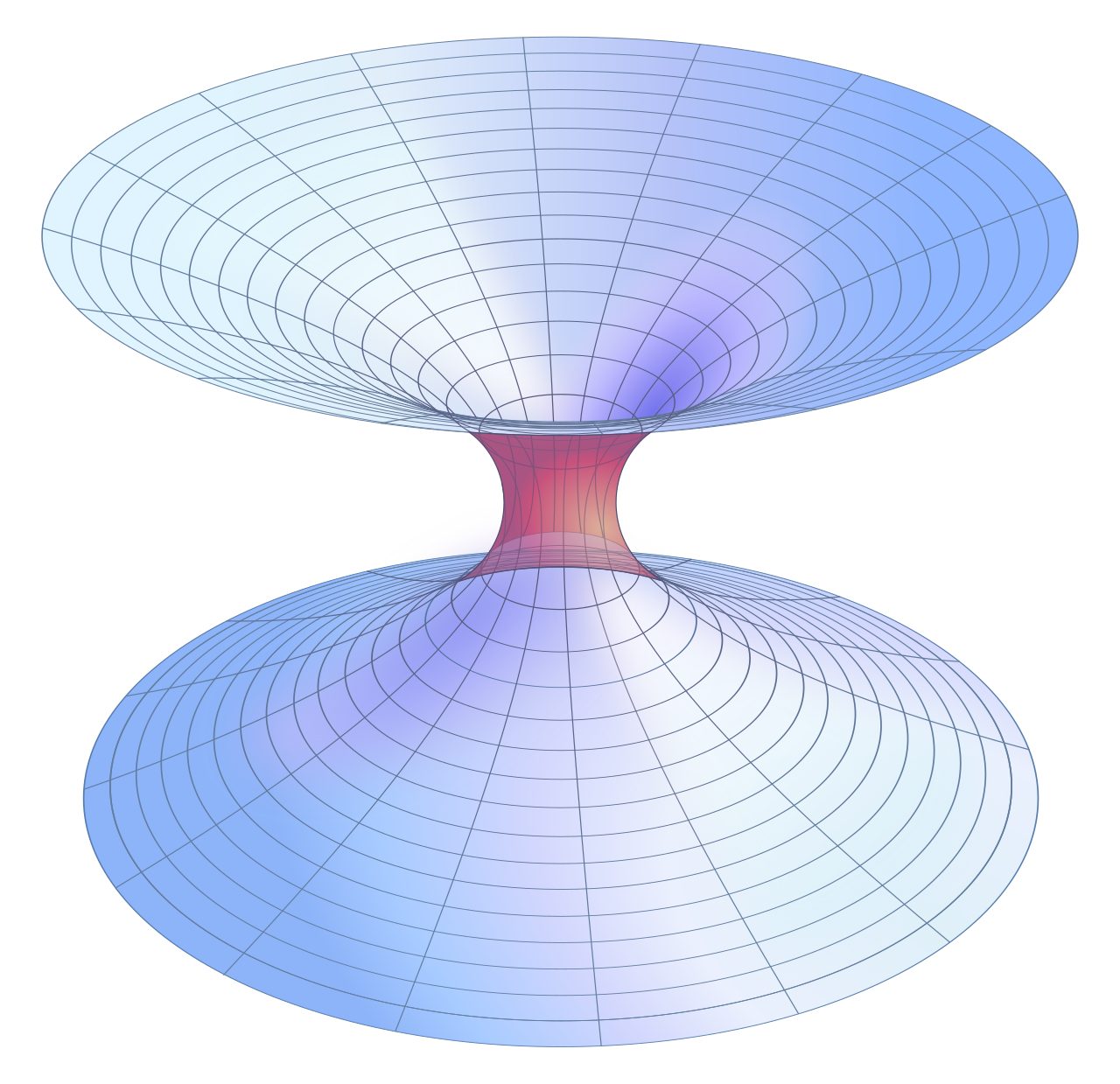
An embedding diagram is how physicists make one of these solutions visible. It flattens the real geometry into a shape the eye can hold: the funnel narrowing to a throat and opening again on the far side, a tunnel between two places the ordinary map says are far apart. What matters is that this is a genuine solution of Einstein's field equations, drawn precisely, not an artist guessing. The picture is completely honest about the physics and completely silent about the hardware, which is the theme of the entire toolkit. The geometry is available on paper. The throat-holding exotic matter that would make it real is not.
None of this is amateur speculation, and governments have funded the study directly. The DARPA-backed 100 Year Starship Study (2011 to 2013) and NASA's Breakthrough Propulsion Physics Program (1996 to 2002) both examined metric-engineering and exotic-propulsion frameworks as serious long-term research questions, exactly the warp-and-wormhole material above. Funding a literature review is not the same as owning a working engine, but it does mark the difference between a message board and a research program.
04The Other Approach: Delete the Mass
There is a completely different way to beat the g-force problem, and it does not touch spacetime at all. Instead of moving space around the craft, you change the craft. If you could reduce how much a vehicle resists being accelerated, its inertial mass, then a modest force would produce an enormous acceleration, and the crushing g-loads of the Nimitz profile would simply never arise.
The concept has a name and a history. Inertial mass reduction means decreasing the effective inertial mass of an object so that smaller forces produce larger accelerations, and it has been explored in several theoretical contexts. It is worth being precise about what it would buy: not more powerful engines, but a craft that barely resists them.
The most talked-about version wears a US Navy patent. Between 2016 and 2019, Navy scientist Salvatore Cezar Pais filed patents describing a 'craft using an inertial mass reduction device,' proposing that a rapidly rotating, high-frequency electromagnetic field could reduce a craft's inertial mass. The patents were approved by the Navy, which is a real and genuinely strange fact, but a patent grant certifies a description, not a working device, and the physical validity of the mechanism is disputed by mainstream physicists. The patents as documents, their filing history, and the decades of laboratory material analysis around the 'reverse engineering' claim are a separate story, told in a companion dossier, Metamaterials and 'Reverse Engineering'. What belongs here is only the physics the patent claims.
Here is why the idea refuses to die, because it is the cleanest answer to the whole puzzle. If inertial mass reduction is real, it explains the flight characteristics directly: a craft could pull thousands of g without tearing apart and without pulping a crew, because there would be no g-forces to speak of, the mass that would feel them has been reduced or effectively removed. That single move, if it were possible, would turn the impossible Nimitz numbers into ordinary ones. The word doing all the work in that sentence is if, and no experiment has yet supplied it.
05Pulling Power From Empty Space
Every propulsion scheme so far needs a power source to match its ambitions, and one candidate is stranger than any fuel: empty space itself. The idea is not that the vacuum is a metaphor for energy. It is that the vacuum measurably contains energy, and a minority of physicists think a craft might tap it.
The starting point is solid physics. The quantum vacuum, the zero-point electromagnetic field, contains energy even in its lowest possible state, its ground state. This is not a hypothesis: it is demonstrated experimentally by the Casimir effect, in which two uncharged parallel plates placed extremely close together are pushed toward each other by the vacuum fluctuations around them. The energy of empty space is real and measurable.
From there the proposals get bolder. The physicist Hal Puthoff and others have argued that interactions with the zero-point field could in principle supply both propulsion, by pushing against the vacuum electromagnetic field in an asymmetric way to generate thrust, and power, by extracting energy from the vacuum fluctuations themselves. On paper, it would solve the fuel problem and the thrust problem at once.
This is where the field splits, and honestly so. Whether usable energy can actually be extracted from the quantum vacuum is contested. Most mainstream physicists consider it thermodynamically impossible: a vacuum in its ground state has, by definition, no lower state to fall to, so there is nothing to draw down. A minority argue that non-equilibrium quantum effects might open a loophole. The disagreement is real and unresolved, and it sits right at the boundary between bold theory and wishful thinking.
06What the Government Paid to Read
If all of this sounds like it belongs only in journals, it does not. The US government commissioned a formal review of exactly these ideas, by exactly the physicists who work on them, and then quietly released most of it.
Under the Defense Intelligence Agency's AAWSAP and AATIP efforts, the government commissioned 38 Defense Intelligence Reference Documents, or DIRDs, peer-reviewed-quality survey papers on advanced propulsion and related topics. Several map directly onto this article: 'Warp Drive, Dark Energy, and the Manipulation of Extra Dimensions' and 'Traversable Wormholes, Stargates, and Negative Energy,' both by Eric Davis, and 'Advanced Space Propulsion Based on Vacuum Engineering' by Hal Puthoff.
Take the DIRDs for exactly what they are, no more and no less. They were written by credentialed physicists and amount to the most systematic US government-funded review of exotic propulsion concepts on record. But they describe theoretical possibilities, not demonstrated technologies. The government paid serious people to read the hard literature carefully. It did not, in these documents, unveil an engine.
07At the Edge of the Evidence
Beyond the published physics sit two claims that a lot of people assume are the whole story, and that the evidence cannot yet support. They belong in the conversation, clearly marked.
David Grusch and other whistleblowers have alleged that the US government possesses retrieved non-human craft and has tried to reverse-engineer their propulsion systems. If true, it would mean at least one of the frameworks above, or something stranger, has already been solved by someone. As of now, these claims are unverified through publicly available evidence, which is why they sit at the speculative tier rather than higher or lower.
A related speculation holds that UAP propulsion works by direct manipulation of gravitational fields, whether through exotic matter, high-energy electromagnetic effects on the curvature of spacetime, or physics not yet discovered. It is a reasonable direction for imagination to go, given the flight characteristics, but it remains highly speculative: a description of what would have to be true, not evidence that it is.
08Where the Claims Break
An honest tour has to end at the two places the popular version of this story overreaches, because both are repeated constantly and both are wrong in instructive ways.
The first is the confident assertion that anti-gravity is well-understood. That claim is [OVERSTATED]. Despite decades of research and a steady stream of announcements, no laboratory has ever demonstrated gravitational shielding, gravitational repulsion, or inertial mass reduction in a controlled, repeatable experiment. The various anti-gravity devices floated by individual inventors over the years have not survived scrutiny. There is no established, working anti-gravity physics to appeal to, only theory, patents, and unreplicated claims.
The second is the equally common line that known physics cannot explain UAP flight. That claim is [NUANCED], not simply true. General relativity does allow exotic propulsion, warp drives and wormholes are consequences of the accepted theory, so the barrier is not our physics but our engineering: producing and controlling exotic matter and negative energy. Whether real UAP, if any are genuine craft, use these mechanisms or something entirely unknown is completely open. 'Physics forbids it' is false, and 'physics explains it' is unearned. The truth lives in the uncomfortable space between.
Fast Facts
- The Problem
- A real propulsion theory has to explain flight characteristics no aircraft can produce: instant acceleration, no visible propulsion, hypersonic travel with no sonic boom, and air-to-water transit. A peer-reviewed 2019 Entropy paper put the implied accelerations from nearly 100 g to several thousand g.
- Warp Bubbles
- Miguel Alcubierre's 1994 metric is a valid solution of Einstein's field equations: it warps space around a craft for effective faster-than-light travel. It needs negative energy (exotic matter) never produced in bulk. Harold White's toroidal refinement could cut the requirement by many orders of magnitude.
- Wormholes
- Michael Morris and Kip Thorne showed in 1988 that general relativity permits a traversable wormhole, given exotic matter to hold its throat open. Krasnikov tubes and the Van den Broeck modification are related metric-engineering routes. The open question is engineering, not physics.
- Inertial Mass Reduction
- The Navy's Pais patents propose that a high-frequency rotating electromagnetic field could cut a craft's inertial mass, which would erase the g-forces entirely. The Navy approved the patents; mainstream physicists dispute the mechanism. The patent-as-document history lives in the Metamaterials dossier.
- Vacuum Energy
- The Casimir effect proves the quantum vacuum holds real, measurable energy. Hal Puthoff and others proposed drawing propulsion and power from it. Whether usable energy can actually be extracted is contested, and most physicists say it cannot.
- The Paper Trail
- The 38 AAWSAP DIRDs, by credentialed physicists, are the most systematic US government-funded review of exotic propulsion on record, including Eric Davis's warp-drive and wormhole papers and Hal Puthoff's vacuum-engineering paper. They describe theoretical possibilities, not demonstrated technology.
- Corrected
- 'Anti-gravity is well-understood' is [OVERSTATED]: no lab has ever shown gravitational shielding, repulsion, or inertial mass reduction in a controlled, repeatable experiment. 'Known physics cannot explain UAP flight' is [NUANCED]: general relativity does permit exotic propulsion in principle.
What the Physics Actually Allows
Start with what is documented, because it is a lot. The observed flight characteristics are real reports: the 2014 to 2015 Roosevelt encounters, the ODNI's 18 logged incidents, and the Nimitz object whose implied acceleration a peer-reviewed 2019 Entropy paper by Knuth, Powell, and Reali estimated at nearly 100 g to several thousand g, with no matching air disturbance, sonic boom, or heat. The theoretical physics is just as real: Miguel Alcubierre's 1994 warp metric is a valid solution of Einstein's field equations, Morris and Thorne showed in 1988 that general relativity permits a traversable wormhole given exotic matter, and both DARPA's 100 Year Starship Study and NASA's Breakthrough Propulsion Physics Program examined this material as funded research. All Tier 1, all checkable.
The mechanisms that would connect the physics to the flight characteristics live here, credible but unproven. Inertial mass reduction, the idea behind the Navy's Pais patents, would explain surviving thousands of g if a craft's effective mass could be cut, and the Navy did approve the patents, but the mechanism is disputed by mainstream physicists. The quantum vacuum genuinely holds energy, proven by the Casimir effect, and Hal Puthoff and others proposed drawing propulsion and power from it, but the thermodynamics are contested and most physicists judge usable extraction impossible. The 38 AAWSAP DIRDs are the most systematic government-funded review of all of it, credentialed and serious, and still theoretical.
Two threads stay speculative. David Grusch and other whistleblowers allege retrieved non-human craft and reverse-engineering programs, which remain unverified through publicly available evidence. And the notion that UAP directly manipulate gravitational fields, through exotic matter, electromagnetic effects on spacetime curvature, or undiscovered physics, is a hypothesis shaped to fit the observations, with no demonstration behind it. Both are worth stating, and neither is yet more than a possibility.
And two popular claims get corrected outright. 'Anti-gravity is well-understood' is [OVERSTATED]: after decades of trying, no laboratory has ever demonstrated gravitational shielding, gravitational repulsion, or inertial mass reduction in a controlled, repeatable experiment, and the inventors' devices that claimed it did not hold up. 'Known physics cannot explain UAP flight' is [NUANCED] rather than true: general relativity does permit exotic propulsion in principle, so the barrier is engineering exotic matter, not fundamental physics. Which leaves the simplest Tier 4 fact of all, the one nothing in this article softens: no working exotic-propulsion device has ever been built or demonstrated, anywhere, by anyone.
So here is where the physics actually leaves us. The equations are not the wall. Alcubierre wrote a warp drive into general relativity in 1994 and no one has found the flaw since; Morris and Thorne did the same for wormholes six years earlier. The wall is a single substance, exotic matter in spacecraft quantities, that no one has ever made, and a shelf of laboratory demonstrations that have never once happened. That is a very specific kind of open question, and it cuts both ways. If even one of those documented objects is a real machine, then somebody or something has already solved the exotic-matter problem our own best theories say is permitted and our own best engineering says is impossible. If not, we are measuring something we have not yet understood. Either way, the question the whole field now turns on is no longer whether the physics allows it. It is who, or what, already knows how to build it?
Sources & further reading
Everything above is drawn from our research library on Theories of Anything, which is where we worked from. The papers, reports and primary records listed beneath them are where you can check us independently.
Image credits
- A photographic portrait of the physicist Miguel Alcubierre Photo: Campus Party Mexico, via Wikimedia Commons. CC BY 2.0 Source.
- A diagram of the Alcubierre warp field Diagram: AllenMcC., via Wikimedia Commons. CC BY-SA 3.0 Source.
- A photograph of the White-Juday Warp Field Interferometer laboratory apparatus at NASA Photo: NASA / Dr. Harold White, via Wikimedia Commons. Public domain Source.
- A mathematical embedding diagram of a Lorentzian, Schwarzschild-type wormhole Diagram: AllenMcC. and KES47, via Wikimedia Commons. CC BY-SA 3.0 Source.
- A photographic portrait of the physicist Kip Thorne Photo: Keenan Pepper, via Wikimedia Commons. CC BY-SA 3.0 Source.
- Card crop of a photographic portrait of the physicist Miguel Alcubierre Photo: Campus Party Mexico, via Wikimedia Commons. CC BY 2.0 Source.


