Star Beings and Sky People: What Are They Actually Said to Be?
The argument about star beings always jumps to the wrong question: did aliens visit? Ask the traditions themselves what these beings are and the answers come back stranger, more specific, and far more interesting. A Hopi kachina is a spiritual intermediary that spends half of every year living in the Hopi villages and half in the San Francisco Peaks. A Sumerian Anunnaki is a divine judge of the underworld whose name reads as princely seed. An Egyptian king does not meet a star being at all, he becomes one, joining the Imperishable stars by transformation. And in unconnected traditions worldwide, one of the seven Pleiades sisters has quietly gone missing. This dossier is the entity file: what each being is actually said to be, on its own tradition's terms, and what gets destroyed when a modern industry flattens all of them into a single borrowed word.
Two different questions hide inside the phrase star people, and this wing keeps them deliberately apart. The first is the map question: which peoples, on which continents, trace their origins and calendars to which named stars. That world map already has its own dossier in this wing, Star People: The Tribes Who Say They Came from the Sky, and nothing from it is re-run here. This file asks the second question, the one the modern alien industry never slows down to ask: when a tradition names a star being, what does it say that being actually is? Not who makes the claim. What the entity is. The answers on record turn out to be precise, wildly different from one another, and quietly devastating for the modern reading, because not one of them unambiguously describes a visitor in a craft.
Our research file's own summary hands the reader a tool before it hands over a single being: a four-way distinction for evaluating any star-being claim. A tradition may encode genuine astronomical observation in mythic language. It may be a cosmic origin narrative expressing cultural identity. It may describe spiritual or visionary experience interpreted through a stellar framework. Or it may be the fourth thing, a modern retrojection of extraterrestrial contact onto ancient myths. Hold those four categories in view as this file walks through its beings. The first three are things traditions genuinely do. The fourth is not something a tradition does at all. It is something done to a tradition.
01What A Kachina Actually Is
Start with a tradition the ancient-astronaut industry has raided freely, and read what it actually says. Hopi kachinas, also written katsina, are spiritual beings in Hopi religion, understood as intermediaries between the human world and the spirit world. And they keep an address. Kachinas spend half of every year residing in the Hopi villages themselves, and the other half in the San Francisco Peaks and other spirit locations. That is the documented entity: a being with a role, a relationship, and a seasonal residence, woven into the working religious life of a real community.
The sky enters on the tradition's own terms. Some kachina narratives describe an origin from the stars or the sky, and in those narratives the kachinas bring rain, fertility, and ceremonial knowledge to the Hopi. Look at what the stellar origin is doing in that sentence: it frames beings whose entire documented function is intermediation, blessing, and teaching. There is no craft in the description, no planet, no landing. A sky origin and an alien visitation are not the same claim, and only one of them appears in the record.
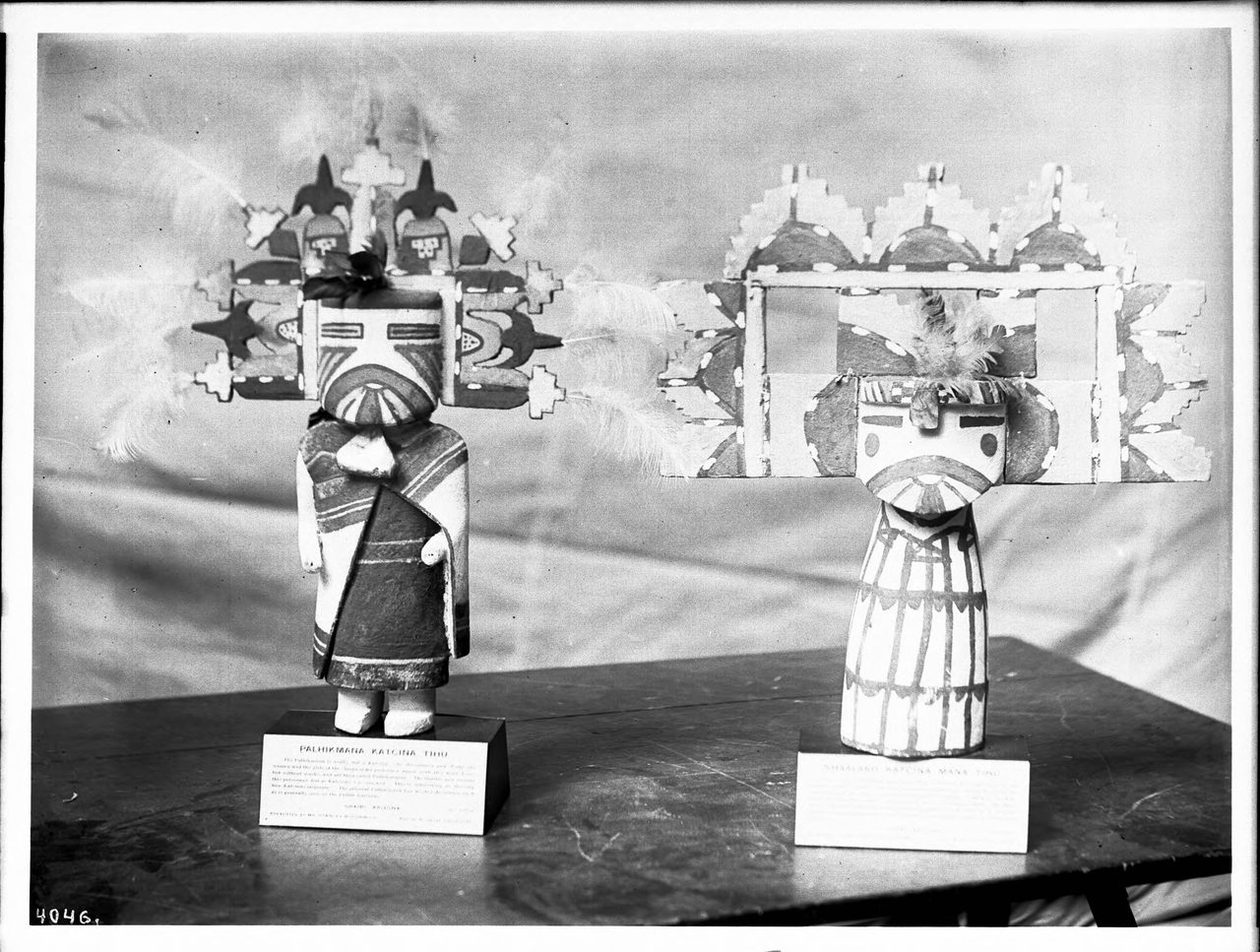
The tradition teaches itself forward. Kachina dolls, the tithu, represent these beings and are given to children as educational tools within the living tradition. That one detail should recalibrate the whole subject: this is not a fossilized myth waiting for outside decoders. It is a curriculum, still running, in which each generation learns who the kachinas are from the people who actually hold the tradition.
So say the next part plainly, because the research file does. The kachina system is a living religious tradition, not a historical artifact, and Hopi communities have expressed repeated concern about misrepresentation and appropriation by outsiders, with ancient astronaut theorists named specifically among them. When ancient-astronaut theorists recast kachinas as extraterrestrials, that is not a fresh interpretation of a dead mythology. It is a living community's religion being rewritten by outsiders, over that community's own repeated objections.
02The King Who Becomes A Star
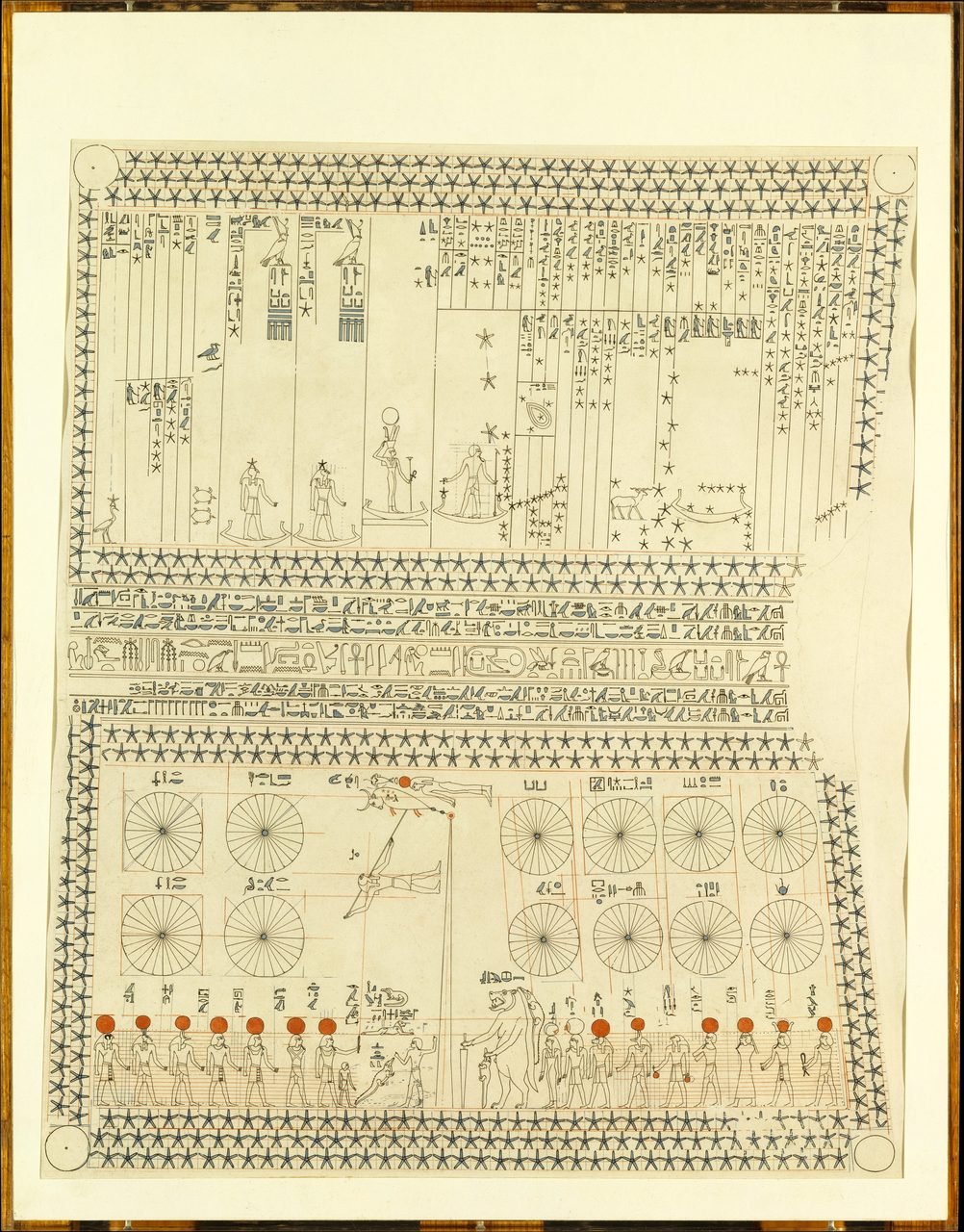
Ancient Egypt files the strangest entity claim in this dossier, and it stands at Tier 1 because the texts survive. The Pyramid Texts identify the deceased king with the circumpolar Imperishable stars, the stars that never set, and with Orion as Sah and Sirius as Sopdet. The king's posthumous transformation into this specific class of star-being was a core element of Old Kingdom royal ideology. Read the direction of travel carefully, because it is the exact reverse of the modern story. Nothing descends. A specific, named human being dies and goes up, becoming a star-being by transformation. Here the star being is not a visitor at all. It is a destination.
Sopdet is also a warning about how crowded the territory around Sirius gets. The most contested modern episode involving a star-being claim anywhere in this wing orbits that same star: the Dogon of Mali and the beings called the Nommo. That whole affair, the ethnography, the claims table, the dispute over what was known and when, already has its own dedicated dossier, The Dogon, the Nommo, and the Secret of Sirius, and this file deliberately leaves every detail of it there.
03The Missing Seventh Sister
Now for the strangest documented fact in the file, an entity defined by not being there. Norris and Hamacher's 2011 cross-cultural study documented a remarkably consistent lost Pleiad motif: one of the seven visible Pleiades stars described as missing, faded, or hidden, recurring across unconnected mythological traditions worldwide. Be exact about what earns Tier 1 here, because the file is exact. The documented finding is the motif's cross-cultural existence itself: traditions with no contact with one another repeatedly describing one of the seven as missing, faded, or hidden, and telling a story about the one who is gone. Why the same absence shows up everywhere is a different question, and it drops a tier the moment it is asked.
The culture-by-culture versions of the Pleiades story, the Greek sisters, the Aboriginal Australian traditions, the Japanese, Hindu, and Cherokee tellings, are the traditions dossier's territory, and they are all there in Star People. What this file keeps is the one thing those versions share: the missing member.
Two explanations for the pattern are on the table, and the file grades both as speculative, so this article does too. The first would rewrite the history of storytelling: the motif is extremely ancient, possibly originating before the dispersal of human populations out of Africa, a hypothesis associated with Rappenglück (1999), which would make it an oral tradition preserved for tens of thousands of years. The second is deflationary and every bit as unproven: the seventh star genuinely is faint, Pleione or Celaeno, and that real physical faintness may independently inspire the same missing-member motif everywhere the cluster is watched, with no shared transmission at all. One answer makes the story older than civilization. The other makes the sky itself the author, everywhere at once. The file refuses to choose, and the honest tier for both is exactly where it sits: Tier 3.
04The Anunnaki: What The Word Actually Says
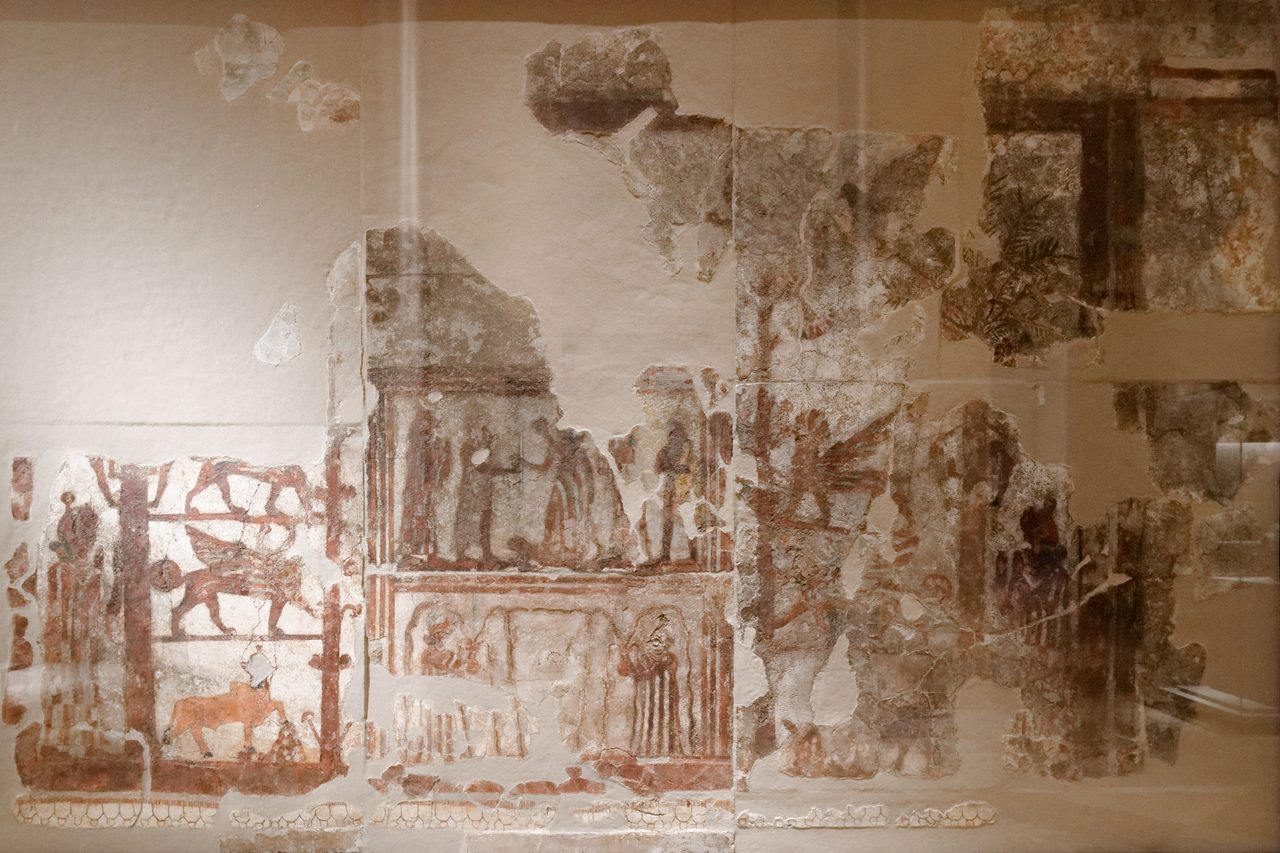
Now the case at the center of this article, the entity description that got rewritten hardest in the modern era. In the cuneiform sources, the Anunnaki are a group of deities in the Sumerian and Akkadian pantheon. The scholarly reading of the name is princely seed, or seed of the prince. Their documented roles are specific and entirely Mesopotamian: they are divine judges of the underworld and members of the divine assembly. They are firmly embedded in Mesopotamian theological categories, and the primary sources do not describe them as arriving from other planets. The file grades this Tier 2 and this article keeps it there: standard scholarship, stated carefully, with nothing in it for a spacecraft to do.
The rewrite has an author, a title, and a date. Zecharia Sitchin, in The 12th Planet (1976), reinterpreted the Anunnaki as extraterrestrial beings from a planet he called Nibiru. That interpretation is rejected by all professional Sumerologists as built on mistranslation and selective quotation of cuneiform texts. The research file's key citation is Heiser's 2004 critique, The Myth of a Sumerian 12th Planet, and it names Halloran, Dalley, and Lambert within the same scholarly consensus. Mark what is documented here, because the tier is doing honest work: the Tier 2 finding is the rejection itself, an entire professional field checking the translation underneath the theory and reporting that it is not there.
The Anunnaki carry a far bigger file than this one section, the tablets, the mythology, the whole modern afterlife of the idea, and it lives in our dedicated Anunnaki dossier. What this article keeps is only the entity verdict: in their own sources the Anunnaki are gods of the Mesopotamian pantheon, judges of the underworld and members of the divine assembly. The extraterrestrial version comes from a modern book, not from an ancient tablet.
| Tradition | The Being | What It Is Said To Be | Tier |
|---|---|---|---|
| Hopi | The kachina (katsina) | A spiritual intermediary between the human and spirit worlds, resident half the year in the villages and half in the San Francisco Peaks and other spirit locations; some narratives give a stellar or sky origin | 1 |
| Old Kingdom Egypt | The transformed king | The deceased king becomes a specific class of star-being: the circumpolar Imperishable stars, Orion as Sah, Sirius as Sopdet | 1 |
| Worldwide, unconnected traditions | The lost Pleiad | One of the seven visible Pleiades stars, described as missing, faded, or hidden | 1 the motif, 3 the why |
| Sumerian and Akkadian | The Anunnaki | Deities of the pantheon: divine judges of the underworld and members of the divine assembly; the name reads as princely seed | 2 |
| The modern ancient-astronaut industry | All of the above | Literal extraterrestrial visitors, a reading the research file marks unsupported | 4 |
05The Flattening
Here is the ruling the whole dossier has been building toward, and it is not this article's aggression, it is the research file's own explicit tag: unsupported. The equation of mythological sky people or star beings with actual extraterrestrial visitors imposes a modern conceptual framework onto traditions that function within their own cosmological logics. No ancient text unambiguously describes beings arriving in spacecraft from other solar systems. And the ancient-astronaut interpretation does not merely lack support, it requires systematic mistranslation and decontextualization of source material to exist at all, the very method this article just watched fail on the Anunnaki's own name.
The counter-explanation is documented scholarship with a mechanism, not a dismissal with a shrug. Comparative mythologists and anthropologists dispute that worldwide sky-people and star-being myths are evidence of ancient extraterrestrial contact, because the traditions are better explained by universal human experiences: celestial observation, meteorological phenomena, and the cognitive tendencies toward animism and agency attribution described by Boyer (2001). Cross-cultural similarity in sky mythology reflects common human psychology meeting shared astronomical stimuli, and the demonstration is built into the record itself: similar star myths developed independently in geographically isolated populations. Same sky, same mind, same stories. No fleet required.
Run the file's four-way test back across everything above. The lost Pleiad may be the first category at work, a genuine astronomical observation encoded in myth, if the faintness reading holds. The Pyramid Texts' Imperishable stars carry the shape of the second at full strength, a cosmic narrative expressing royal identity. The kachina narratives sit closest to the third, spiritual experience interpreted through a stellar framework, inside a religion that is still alive to say so. Three categories, all native to the traditions themselves. The fourth, modern retrojection, is the only one that had to be imported, and its flagship exhibit is a 1976 rereading that the people who can actually read the tablets have rejected outright.
Fast Facts
- The Intermediaries
- Hopi kachinas, also written katsina, are spiritual beings understood as intermediaries between the human and spirit worlds, residing half the year in the Hopi villages and half in the San Francisco Peaks and other spirit locations. Some narratives describe an origin from the stars or the sky, bringing rain, fertility, and ceremonial knowledge.
- The Teaching Dolls
- Kachina dolls, the tithu, represent the beings and are given to children as educational tools inside a living religious tradition, not a historical artifact.
- The Standing Objection
- Hopi communities have expressed repeated concern about misrepresentation and appropriation by outsiders, and the research file names ancient astronaut theorists specifically among them.
- The King's Transformation
- The Egyptian Pyramid Texts identify the deceased king with the circumpolar Imperishable stars and with Orion as Sah and Sirius as Sopdet: a documented Old Kingdom claim about what a specific being becomes, not about who arrives.
- The Missing Sister
- Norris and Hamacher's 2011 cross-cultural study documented the lost Pleiad motif, one of the seven visible Pleiades stars described as missing, faded, or hidden, recurring across unconnected traditions worldwide.
- The Real Etymology
- The scholarly reading of Anunnaki is princely seed, or seed of the prince: deities of the Sumerian and Akkadian pantheon, divine judges of the underworld and members of the divine assembly, never described in the primary sources as arriving from other planets.
- The Rejected Rewrite
- Zecharia Sitchin's The 12th Planet (1976) recast the Anunnaki as extraterrestrials from a planet he called Nibiru. Professional Sumerologists reject the reading as mistranslation and selective quotation; the file cites Heiser's 2004 critique and names Halloran, Dalley, and Lambert in the same consensus.
- The Four-Way Test
- The research file's own framework for any star-being claim: genuine astronomical observation encoded in myth, a cosmic origin narrative expressing cultural identity, spiritual or visionary experience in a stellar framework, or modern retrojection of extraterrestrial contact onto ancient myths. Only the last one is imported.
What The Evidence Actually Holds
The entity descriptions are documented, and the headline is how little they resemble each other, or a visitor. Hopi kachinas are spiritual beings, intermediaries between the human and spirit worlds, resident half the year in the Hopi villages and half in the San Francisco Peaks and other spirit locations; some narratives give them an origin among the stars or the sky, bringing rain, fertility, and ceremonial knowledge; the tithu dolls teach children the tradition from inside; and the system is a living religion whose communities have repeatedly objected to outsider misrepresentation, ancient astronaut theorists included. The Egyptian Pyramid Texts document what a deceased king becomes: identified with the circumpolar Imperishable stars and with Orion as Sah and Sirius as Sopdet, a transformation at the core of Old Kingdom royal ideology. And the lost Pleiad motif is documented as a real cross-cultural pattern by Norris and Hamacher's 2011 study: one of the seven visible Pleiades stars described as missing, faded, or hidden, across unconnected traditions worldwide.
The Anunnaki material holds at Tier 2, and it holds firmly. The scholarly reading of the name is princely seed, or seed of the prince; in cuneiform sources the Anunnaki are divine judges of the underworld and members of the divine assembly, firmly embedded in Mesopotamian theological categories and never described in the primary sources as arriving from other planets. Zecharia Sitchin's reinterpretation of them as extraterrestrials from Nibiru, in The 12th Planet (1976), is rejected by all professional Sumerologists as mistranslation and selective quotation of cuneiform texts; the file's key citation is Heiser's 2004 critique, with Halloran, Dalley, and Lambert named in the same consensus. And the positive counter-explanation is documented too: sky-being myths worldwide are better explained by shared human psychology, celestial observation, meteorological phenomena, and the animism and agency attribution described by Boyer (2001), demonstrated by similar star myths arising independently in geographically isolated populations.
The two explanations for the lost Pleiad's worldwide reach both stay on the speculative shelf, exactly where the file grades them. The deep-time hypothesis, associated with Rappenglück (1999), would push the motif's origin back before the dispersal of human populations out of Africa, an oral tradition preserved for tens of thousands of years. The rival reading needs no transmission at all: the seventh star, Pleione or Celaeno, genuinely is faint, and that physical fact may independently generate the same missing-member story wherever humans watch the cluster. Either would be extraordinary. Neither is established. Tier 3, both of them.
Star beings as literal extraterrestrial visitors: no. The research file marks the claim unsupported in its own text, and this article rules it out with it. Equating mythological sky people or star beings with actual extraterrestrial visitors imposes a modern conceptual framework onto traditions that function within their own cosmological logics. No ancient text unambiguously describes beings arriving in spacecraft from other solar systems, and the ancient-astronaut interpretation requires systematic mistranslation and decontextualization of source material to stand at all. The Anunnaki case shows the method in the open: a documented Mesopotamian theological category, pseudo-translated into a space program the primary sources never describe. Nothing in this file's record supports the literal reading. Everything in it deserves better.
Put the beings side by side one last time. A spirit intermediary that lives half the year among the people it serves. A dead king climbing into the stars that never set. A divine judge of the underworld whose name means princely seed. A seventh sister nobody can quite see. Four traditions, four utterly different answers to what a star being is, and not one of them is a passenger stepping off a craft. So here is the question this dossier leaves open, and it is sharper than the one the alien industry keeps asking. If a Hopi kachina, an Anunnaki judge of the underworld, and a missing seventh sister in the Pleiades all get flattened into the same single word, aliens, what actually gets lost: the possibility of real contact, or the specific, precise, and very different thing each of these traditions was trying to say a star being is?
Sources & further reading
Everything above is drawn from our research library on Theories of Anything, which is where we worked from. The papers, reports and primary records listed beneath them are where you can check us independently.
Image credits
- Investiture of Zimri-Lim, fresco from the royal palace of Mari, circa 1700 BCE, Louvre photograph by Marie-Lan Nguyen, via Wikimedia Commons. Public domain Source.
- Two Hopi kachina dolls (Palhikmana Katcina Tihu and Shalako Katcina Mana Tihu), circa 1906 photograph by C.C. Pierce, via Wikimedia Commons. Public domain Source.
- Astronomical ceiling facsimile, Tomb of Senenmut, Deir el-Bahri, Metropolitan Museum of Art via Wikimedia Commons. CC0 1.0 Source.
- Card crop of Investiture of Zimri-Lim, fresco from the royal palace of Mari, circa 1700 BCE, Louvre photograph by Marie-Lan Nguyen, via Wikimedia Commons. Public domain Source.

,_ca.1900_(CHS-4046).jpg)
