Ariel School, Zimbabwe 1994: 62 Children, and a Message That Shows Up Two Months Later
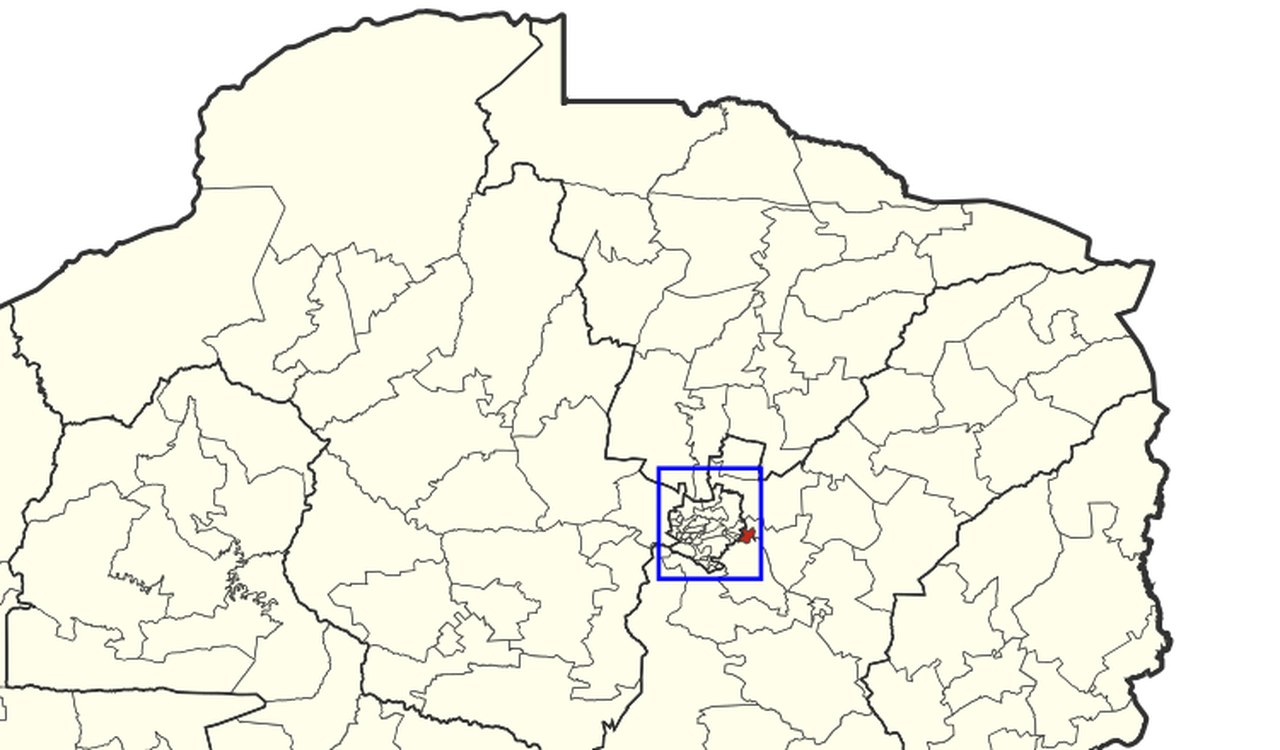
At about 10:00 in the morning on September 16, 1994, roughly 62 children at Ariel School in Ruwa, Zimbabwe came in from mid-morning break saying a craft had come down near the schoolyard and that there was something beside it. Most of the teachers were inside at a staff meeting and did not see it. Three separate investigators reached those children over the following two months, and what each of them collected was not the same story. That gap is the real case. Our own research file does two things this page will not do: it rests the children's reliability on their being rural Africans with limited access to Western UFO culture, which is false, and it states that no significant counter-arguments exist in the scholarly literature, which is also false. So here is the honest version. What 62 children reported, what the roughly 180 children standing beside them reported seeing, who asked them what and when, and why the case's most famous detail, a telepathic warning about the environment, is missing from the account collected four days after the event and present in the one collected two months later. The witnesses were between six and twelve years old. They are adults now, and this page is written on that basis.
Before anything else, the thing that governs how this page is written. Every witness in this case was a primary-school child in September 1994. They are adults now, in their late thirties and early forties, living ordinary lives in several countries, and they have been asked about one morning of their childhood ever since. They are not a data set. Where this dossier names a person, it is because that person chose to be public and said the thing on the record, and it says where. Nobody else gets named here, including anyone identifiable in the 1994 footage who has never spoken for themselves, and that omission is deliberate rather than a gap.
The second thing worth saying up front is that this article disagrees with its own source file repeatedly, and in four structural ways. Our research document on this case is structurally complete and it is one-sided in a way that would produce a dishonest page if it were simply transcribed. Where that happens, this dossier says so out loud, gives the evidence, and queues the correction back to the library rather than quietly keeping the version that reads better.
01The Morning Of September 16
On September 16, 1994, at approximately 10:00 to 10:15 in the morning during recess, roughly 62 children at Ariel School in Ruwa, Zimbabwe reported seeing one or more unusual craft land or hover near the schoolyard, and one or more non-human beings near the craft.
Two figures on that Tier 1 line need fixing before anything is built on them. Our file puts Ruwa about 20 km from Harare with no direction; the external record and this site's own live page on the abduction phenomenon both put it about 22 km southeast of the capital. Our file gives the children's ages as 5 to 12, and then builds part of its own reasoning on the suggestibility of the 5 to 7 band; three external sources give the range as 6 to 12. This page uses 22 km southeast and 6 to 12, and both differences are logged back to the library.
Estimates of the number of child witnesses vary between 50 and 70, with 62 the usual figure. The event happened during a period when most teachers were inside at a staff meeting. Teachers, largely absent from the schoolyard, returned to find children in varying states of distress and excitement, some of the younger ones crying.
Now the number our file leaves out, and it is the number that changes the shape of the case. Roughly 250 children were outside for mid-morning break that day. About 62 reported seeing something. The remaining 180 or so reported seeing nothing unusual at all. Brian Dunning and Gideon Reid, working independently and both from the skeptical side, agree on that denominator, and neither of them treats it as a debunk, because it is not one. A count of 62 children is still 62 children, and a majority of a playground not noticing an event in a corner of it is exactly what playgrounds are like. But an article that prints '62 witnesses' and never prints '62 out of about 250' has told you less than it knows, and our file never prints the second figure anywhere.
02The School Our Own File Describes Wrong
Ariel School is described in our file as an English-medium private school in Ruwa serving a mixed, multiracial student body.
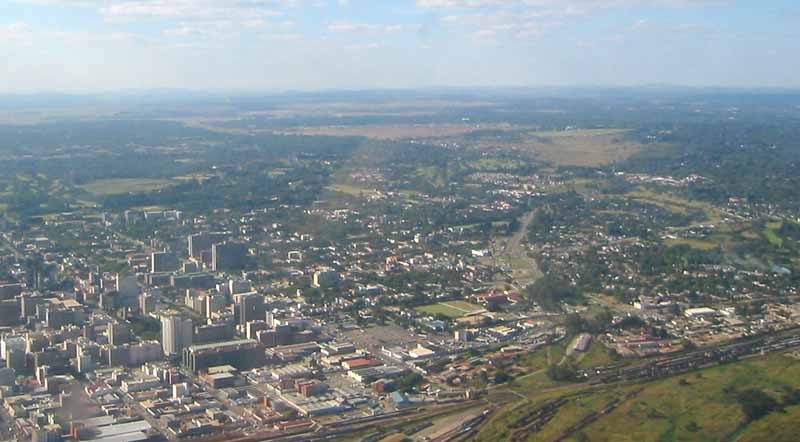
That description is accurate and our file then argues from a completely different picture of the same school. Its Tier 2 case for why these children were reliable rests, in its own words, on their being 'children in rural Zimbabwe in 1994 with limited access to Western UFO culture' who were 'not immersed in Western New Age environmental discourse.' Two independent published sources say the opposite, and the file's own phrase 'English-medium private school' sits awkwardly beside its own word 'rural.'
What the record actually says: Ariel was an expensive private school in a commuter area near Harare, not a remote rural institution. English was the language of instruction. In 1994 its intake was predominantly white Zimbabwean children of British and South African descent, from wealthy families in and around the capital. Dunning's summary of the point is blunt and it is the part that matters here: Ariel's pupils 'had just as much exposure to the world's movies and television as people in every other modern city around the world.'
That detail is on this page for one reason and one reason only. Our file's argument for the children's credibility depends on a picture of the school that is wrong, so the picture has to be corrected in the open or the argument keeps standing on a prop that has been quietly removed. Nothing about a child's school, income bracket, country or background bears on whether that child told the truth about what they saw, and this dossier is not going to pretend otherwise in either direction. What it will not do is use media isolation as evidence, write Ruwa as remote bush, or treat a Zimbabwean schoolyard as more exotic than an American one.
And the isolation premise fails on the wider country too, not just the school. Zimbabwe in September 1994 had a national broadcaster that had run a listener call-in about lights in the sky two nights before the schoolyard event, and it had Cynthia Hind, southern Africa's leading UAP investigator, living and publishing in it. The children who came in from that break were not sealed off from anything.
03Three Investigators, Three Different Clocks
Three separate investigations reached the children. Tim Leach, the BBC's Zimbabwe correspondent, conducted early interviews. Cynthia Hind, southern Africa's leading UAP investigator, arrived within days. Dr. John E. Mack, professor of psychiatry at Harvard Medical School and winner of the 1977 Pulitzer Prize for A Prince of Our Disorder, travelled to Ruwa in late November 1994.
Put dates on that and the case reorganises itself. The story first spread through a ZBC radio report. Tim Leach filmed the children on September 19, three days after the event. Cynthia Hind interviewed them the following day, September 20, four days after. John Mack arrived in November, roughly two months after. Three days, four days, two months. Everything contested about this case tracks that gap, and our file records the three investigators without ever laying their clocks side by side.
Method matters as much as timing, and here our file describes Hind more favourably than the published accounts support. It says she asked the children to draw what they saw before discussing it among themselves. Dunning describes something else: interviews conducted 'in groups of two to six, while other children were allowed to watch and listen to each group.' A second published figure gives the groups as four to six. The two sources disagree about the size and agree about the thing that counts, which is that the other children could hear. Reid, working from the same material, describes the interviews as impatient and frequently interrupting, and argues that this enabled conformity.
Leach's own reaction to the assignment has been widely reported since, and it belongs here because it is the least ambiguous evidence that something real happened to these children that morning. He said afterwards that he could handle war zones, but he could not handle this. Whatever the schoolyard event was, the adults who arrived first did not walk away treating it as a prank.
| Date | What Happened | Where It Sits |
|---|---|---|
| September 14, 1994 | Around 9 pm a brilliant, slow-moving light crosses the sky over southern Africa, breaking into burning streaks over several minutes, reported from Zimbabwe, Zambia, Botswana and South Africa. ZBC radio invites listeners to call in and describe what they saw. | External. The identification of the object as a spent Zenit-2 booster is Brian Dunning's and is the leading candidate, not a confirmed orbital fact. Absent from our file. |
| September 16, 1994 | About 10:00 to 10:15 in the morning, during mid-morning break, roughly 62 children report a craft near the schoolyard and one or more beings near it. Most teachers are inside at a staff meeting. | Tier 1 in our file for the event and the 62 figure. The denominator of roughly 250 children outside is external and appears nowhere in our file. |
| September 19, 1994 | Tim Leach, the BBC's Zimbabwe correspondent, films interviews with the children. Three days after. | External for the date. Our file names Leach and never dates him. |
| September 20, 1994 | Cynthia Hind interviews the children in small groups, with the other children allowed to watch and listen, and collects drawings. Four days after. | External for the date and the method. Our file describes her method more favourably than the published accounts support. |
| Late November 1994 | John Mack interviews roughly 12 children individually, recorded on video. Two months after. | Tier 1 in our file. Of those twelve, three mention receiving messages. |
| 1995 and 1996 | Hind publishes on the case in the MUFON UFO Journal and in her book UFOs over Africa. | Both are bibliography entries in our file. Neither was read directly for this dossier. |
| 2022 | Ariel Phenomenon, directed by Randall Nickerson, returns to the witnesses as adults. | Tier 2 in our file. Runtime and credited subjects verified externally. |
| September 27, 2023 | Netflix releases the docuseries Encounters; its second episode, 'Believers', revisits the case. | External. Absent from our file entirely, including the conflicting account inside it. |
| November and December 2025 | Gideon Reid publishes a detailed critique of the case and the series in Skeptical Inquirer 49(6). | External. Our file states that no significant counter-arguments exist. |
04The Drawings, And Who Chose Them
The drawings collected in the days after the event showed notable consistency: silvery disc or oval shaped craft, and dark-clad humanoid figures with large eyes.
Our file adds that these were independently produced drawings showing convergent features, disc or oval craft, humanoid beings, large dark eyes, despite variation in artistic skill and detail.
The word doing the work in that second line is 'independently,' and it does not survive contact with how the drawings were actually collected. The children were interviewed in small groups with the others watching and listening. And the famous set is a curated one: Hind selected 22 of the drawings as the clearest, and most of the selected drawings depict a conventional flying saucer with standard features. Reid also records that Hind suggested to the children that one of the figures wore a diving suit, an image that recurs across UFO encounter testimony rather than arising fresh in a playground.
None of that makes the drawings worthless. Children drew things, the things they drew resemble each other, and that is a real observation about a real body of material. It is simply a weaker fact than the one our file implies. Consistency across a subset selected by the investigator, gathered in earshot of the other witnesses, is not the same evidential object as consistency across everything produced blind, and a dossier that quotes the convergence without saying which one it is has flattered its own case.
05The Message That Is Not In The First Account
The most distinctive reported feature is a telepathic communication carrying environmental warnings about technology, pollution and ecological destruction. Multiple children described receiving mental impressions or images warning about environmental harm.
Mack interviewed approximately 12 children individually using what our file calls standard psychiatric interview techniques, recorded on video. He assessed them as psychologically normal, with no evidence of psychosis, confabulation or coordinated deception. He reported that the children displayed genuine emotion, particularly fear and confusion, and in some cases a sense of urgency about environmental messages they said they received.
Start with the arithmetic our file avoids. It says 'multiple children' described the message. Of the twelve children Mack interviewed, three mentioned receiving messages from the beings. Three out of twelve is technically multiple and it is not what most readers hear in that sentence, and the ratio is available in print, so there is no reason to write the vaguer version.
Then the finding that reorganises the entire case. The telepathic environmental message does not appear in the accounts Cynthia Hind collected four days after the event. It appears in John Mack's material, collected roughly two months later. That is Dunning's finding, stated by him directly and restated at second hand since, and it is a claim about absence in sources this research pass did not read end to end, so it is carried here as his finding rather than as an independently confirmed absence. It is also the single hardest fact in this file, and our own document asserts the opposite without citing anything.
Our file records the skeptical position that the environmental theme could have been introduced through teacher influence, local cultural context, or interviewer expectation, and answers that investigators report the theme emerged before adult interpretation.
That answer is the most consequential unsupported sentence in the whole document. It names no investigator, cites nothing, and the published record says the reverse. This page does not carry it. What it carries instead is the dispute and the dates, which the reader can check without trusting either of us.
There is more on the interview side, and it needs to be precise because the man it concerns died in 2004 and cannot answer it. Dunning quotes one of Mack's own recorded questions to a child as an example of a leading prompt: 'How did those thoughts come to you? Did they come to you from the craft, or from...?' Mack was a longstanding anti-nuclear and environmental activist, which is documented biography and not an insinuation, and Dunning's inference from those two facts together, that Mack's existing beliefs shaped what he asked, is Dunning's inference and is labelled as such here. Reid, separately, describes Mack's relaxation sessions as functioning as hypnotic technique, which is a different thing from the psychiatric interview our file describes.
The video recordings of Mack's interviews, showing the children's facial expressions, hesitations and emotional states, are treated in the literature as significant primary evidence.
With one limit that has to travel with it. The full recordings of Mack's conversations with the pupils have never been made available for outside scrutiny. What the public has seen, in both documentaries and in every clip circulated since, is an edited selection chosen by people who already had a view. Footage nobody outside can examine is a strange thing to call primary evidence, and it is the reason the four-day and two-month accounts cannot simply be laid side by side by anyone who wants to check.
Here is the honest reading, and it is the third option that both camps skip. Something happened that these children reported truthfully as they experienced it, and the record of what they reported was shaped by how they were asked. Both of those can be true at the same time. An interviewer can introduce a theme with no intent to deceive anyone. A child can answer a question completely honestly and still be answering the question's shape. That is a finding about interviews, not an accusation against six to twelve year olds, and anyone who converts it into one has stopped reading.
06The Argument That Cannot Lose
Our file argues that accounts differed in peripheral details, the exact number of beings, the precise colour of the craft, the specific words of the telepathic message, and that this is what genuine testimony looks like, because uniform accounts across 62 children would instead suggest rehearsal.
Read that carefully and notice what it does. If the accounts agree, that is convergent independent testimony and it counts for the case. If the accounts disagree, that is the natural variation of honest memory and it also counts for the case. There is no result the children could have produced that would count against it. An argument that wins on every possible outcome is not evidence, it is a frame, and naming it is a criticism of the reasoning in our file rather than of any child who was interviewed.
Our file's case for child witnesses: children, especially ages 8 to 12, are generally less capable of sustained coordinated deception than adults, and less motivated by attention-seeking on taboo topics.
Our file's own case against, in the same section: younger children are more susceptible to social contagion and suggestibility, children may incorporate elements from stories heard from older peers, and the interviewing process itself can shape testimony.
That second list is our file's own, written by our file, and then never applied to anything. Which is remarkable, because the published criticisms of this case are precisely the three failures our own weakness list predicts, item for item. Group interviews in which every child could hear the others is social contagion. A theme absent at four days and present at two months is the interviewing process shaping testimony. A recorded leading question is the interviewing process shaping testimony with a transcript attached. Our file wrote down the risks and then filed the case as though none of them had occurred.
Our file concludes that the mix of ages, the independent interviewing by multiple investigators, and the emotional authenticity observed on video tend to support the reliability of the core account.
That conclusion is the file's, not a finding, and its middle term needs splitting. 'Independent interviewing' is accurate at the level of the three investigators, who were unconnected to each other and arrived separately. It is not accurate at the level of what happened inside each investigator's own sessions. Three independent adults can each run a method that contaminates its own results, and the independence of the adults tells you nothing about that.
Our file states at Tier 1 that core narrative elements, craft near the schoolyard, beings near the craft, telepathic communication, environmental theme, were consistent across multiple witnesses interviewed separately.
The first half of that list holds. The second half does not belong in it, and this is the one Tier 1 line in our file that this page refuses to carry as Tier 1. A craft near the schoolyard and beings near the craft are in the record from the earliest collection onward. Telepathic communication and the environmental theme are not in the earliest collection at all, on the published account. Putting all four in a single sentence about what was consistent from the start is the error the rest of this dossier exists to correct.
07Two Nights Earlier
Our file notes that the Ariel School incident occurred during a broader period of increased UAP sighting reports across Zimbabwe and southern Africa in 1994, and states that the connection between the school event and the wider wave, if any, remains unexplored.
It does not remain unexplored. It was simply never looked up, and the leading identified candidate is specific, dated and checkable. Around 9 pm on September 14, 1994, two nights before the schoolyard event, on Dunning's identification, the spent Zenit-2 booster from the August 26, 1994 launch of the Cosmos 2290 satellite re-entered the atmosphere over southern Africa. It broke into burning streaks and crossed the sky silently over several minutes. People across Zimbabwe, Zambia, Botswana and South Africa reported a brilliant slow-moving light. ZBC radio invited listeners to call in and describe what they had seen, and a wave of UFO reports followed across the region in the days before September 16.
Two honesty notes on that paragraph. The re-entry identification is Dunning's, restated by later secondary accounts; this research pass did not confirm it against a satellite decay catalogue, so it is the leading identified candidate for the regional wave rather than a settled orbital fact. And it explains nothing whatsoever about the schoolyard. The Ariel event happened in daylight, two days later, and involved an object described as landed or hovering at close range. A night-time re-entry does not account for that and nobody should pretend it does.
What it accounts for is the room the story was told in. In the two days before that break bell, children across Zimbabwe with a radio had spent two days hearing adults phone a national broadcaster to describe strange lights in the sky. That is the context our file's section on the regional wave says is unexplored, and it is the single most useful thing this research pass added to the case.
08The Counter-Arguments Our File Says Do Not Exist
Our research document's Counter-Arguments section reads, in full: 'No significant counter-arguments exist in the scholarly literature for the core claims in this document. The Zimbabwe Ariel School Encounter represents established historical and descriptive consensus with no active scholarly dispute over the fundamental claims presented here.' That sentence is false, and it is worth being exact about how false. One research pass located four named counter-sources without difficulty: a published critique in Skeptical Inquirer, a Skeptoid episode carrying a named prosaic candidate for the regional wave, a documented on-camera account from a former pupil that conflicts with his own earlier statements, and two named alternative hypotheses with named proponents.
That sentence is a boilerplate artifact that fires across this wing's documents, and here it fired on a case that has an active and specific literature arguing against it. The table below is the section our file should have had.
| Source Or Proponent | The Argument | Where It Stands |
|---|---|---|
| Gideon Reid, Skeptical Inquirer 49(6), November and December 2025 | The Netflix series presents the evidence selectively, against Feynman's rule that you report everything including what could throw doubt on your own interpretation. The full recordings of Mack's conversations with the pupils remain unavailable for outside scrutiny, the series omits Cynthia Hind and Tim Leach entirely, and the Russian rocket explanation had been reported in the British press and is not addressed. | Published, detailed, specific and citable. The single most important source our file does not have. |
| Brian Dunning, Skeptoid episode 4760, December 29, 2020 | The telepathic environmental message is not in the stories Hind collected four days after the event. Hind's interviews were run in small groups with the other children listening. Mack's recorded questions include leading prompts, and Mack was a longstanding anti-nuclear and environmental activist. | The strongest evidential challenge in the literature, and it is a challenge about the interviews rather than about the children. |
| Gideon Reid, on Mack's screening record | Weeks before Ruwa, Mack failed to detect a fabricated abduction account given to him by the journalist Donna Bassett. | Documented. It bears on how well Mack could spot a false account, not on what any child at Ariel saw. |
| Gideon Reid, on Mack's method | Mack's relaxation sessions functioned as hypnotic technique rather than as the standard psychiatric interviewing our file describes. | Published and unaddressed by our file, which asserts the method without qualification. |
| Mass hysteria and social contagion, unattributed in our file | The accounts spread through the group rather than from a shared external event. | Our file grades it Tier 4 [INSUFFICIENT] and reaches that verdict without engaging its strongest form. |
| Gideon Reid, alternative hypothesis | Confusion with a touring puppet show run as part of AIDS awareness performances. | Proposed and named. No broad acceptance, and this dossier does not endorse it. |
| Oliver Smith, alternative hypothesis | Misidentification of a dust devil. | Proposed and named. No broad acceptance, and this dossier does not endorse it. |
| Dallyn Vico, speaking on camera in Encounters (2023) | There was no spaceship and no alien; what was seen was a shiny rock, and the being was made up. | On the record, and in conflict with statements attributed to the same person in 2008. Reported here and deliberately not adjudicated. |
Our file's handling of mass hysteria, marked [INSUFFICIENT]: while mass hysteria and social contagion have been proposed, they typically produce incoherent and contradictory accounts rather than the consistent, detailed and emotionally authentic testimonies observed at Ariel School, and mass hysteria does not typically produce detailed drawings with convergent features across dozens of children.
The grade is our file's and this page keeps it at grade. The reasoning behind it is thin, and that should be said. Our file refuses the weakest version of the contagion argument, the one where dozens of children spontaneously hallucinate the same thing out of nothing. Nobody serious is arguing that. The strong version has a regional fireball saturating national radio two nights earlier, a real event in a corner of a playground, and then a set of interviews in which every child could hear what the last child said. That version is not addressed anywhere in our file, and it deserves to be, because it is the one the published critics actually make.
Our file's handling of the claim that the children were coached, marked [CONTRADICTED]: the children were interviewed by multiple independent investigators at different times using different methods, no evidence of coaching has been identified, teachers were not present during the event, and teachers reported being initially dismissive of the children's claims.
This one this page keeps, in full, as a genuine no. There is no evidence that any adult put this story into these children's mouths before the investigators arrived, and the teachers' documented initial dismissiveness is real evidence against it, because a coaching conspiracy that starts with the adults telling the children to stop being silly is not a coaching conspiracy. Anyone who says the staff of Ariel School organised a hoax in September 1994 is making a claim with nothing behind it.
But the refusal has a boundary, and our file walks straight past it. Coaching before the fact and suggestion during an interview are two different failures with two different evidence bases. The first has nothing behind it and is refused here at Tier 4. The second has a published record behind it: a theme absent at four days and present at two months, a transcribed leading question, group interviews in earshot, and relaxation sessions described in print as hypnotic technique. Refusing the first does not touch the second, and our file reads as though it does.
09The Witnesses, As Adults
Filmmaker Randall Nickerson tracked down witnesses as adults for the documentary Ariel Phenomenon (2022). Multiple witnesses maintained their accounts as adults, reporting the same core experience with the addition of adult reflective perspective.
Ariel Phenomenon runs one hour and forty-one minutes, draws on the 1994 footage and on new interviews with the same witnesses grown up, and credits John Mack, Tim Leach and Emily Trim among its subjects. It was the first film to document the Ariel School accounts at length.
The former pupils who have publicly identified themselves under full names and spoken on the record as adults are the only witnesses named on this page. Emily Trim returned to Zimbabwe on camera for the film, exhibited paintings connected to the experience in 2016, and now lives in Canada. Salma Siddick has given named interviews alongside the filmmaker from 2017 onward and also lives in Canada. Nathaniel Coxall appears in Ariel Phenomenon. Dallyn Vico appears in both Ariel Phenomenon and Netflix's Encounters. Coverage of the Netflix series also names two further witnesses by first name only, and this page leaves them at that. The surname spellings above come from film credits and entertainment-press listings rather than from a primary interview read end to end here, which is worth knowing because a misspelled real person's name is not a rounding error.
Some witnesses reported lasting psychological impact: a sense of urgency about environmental issues, an altered worldview, or difficulty processing the experience.
That is our file's statement about the group and it stays a statement about the group. No individual on this page is being handed a diagnosis or an inner life they did not describe themselves, and nobody should read a named person into a general sentence.
Our file argues that the persistence of consistent accounts over more than 25 years, from childhood into adulthood, across witnesses now living in different countries, adds to the case's evidential weight.
It does add something, and it adds less than it looks like. A memory recounted on camera repeatedly across the years since is stable partly because it has been recounted. That is not a slur on anyone; it is how memory works for all of us, and it is exactly why a police force takes a first statement seriously and treats the twentieth as a different kind of object. Persistence is real and it is not independent confirmation of the first account, because it is downstream of it.
And the witness pool is not unanimous, which our file does not record anywhere. Netflix released Encounters on September 27, 2023, and its second episode, 'Believers', revisits Ariel School with the now-adult witnesses. In it, Dallyn Vico states that there was no spaceship and no alien, that what was seen was a shiny rock, and that the being was made up. That account conflicts with statements attributed to him in 2008, in which he described coloured flashing lights. Reid records that the series frames him as an antagonist.
This page reports both of those and settles neither, and that is a decision rather than an evasion. He is a private adult describing something that happened to him when he was a child, being asked about it again decades later, and a person's memory of a morning in childhood is allowed to be unstable without that person being dishonest. There is nothing here to score and no unmasking, because it is not a dossier's business to rule on which of a man's own memories he is permitted to keep. What the conflict does establish is narrower and it is a fact about the evidence rather than about him: our file's line that multiple witnesses maintained their accounts is true and incomplete, and it needs this beside it.
10What The Case Is Actually Made Of
No physical trace evidence was collected from the Ariel School site: no ground marks, no electromagnetic readings, no biological samples. The investigation focused entirely on witness testimony. Any physical evidence that may have existed was not secured.
Say that plainly, because everything above depends on it. There is no artifact. There is no soil sample, no burn mark, no instrument reading, no photograph taken on the day. What exists is what people said, when they said it, and who was in the room when they said it. That is why the four-day account and the two-month account matter so much: in a case made entirely of testimony, the chain of custody on the testimony is the whole evidence base, and the only recordings that could settle it have never been released.
It is also why the standing of this case should be quoted carefully. Our file calls it one of the most significant mass-witness close-encounter reports in UAP history. The attributed version is better and says almost as much: the Fortean writer Jerome Clark called Ariel School 'the most remarkable close encounter of the third kind of the 1990s.' That is a real assessment by a named person about a specific literature, and it is a narrower claim than the one our file makes in its own voice.
Fast Facts
- The Morning
- September 16, 1994, approximately 10:00 to 10:15 in the morning, during mid-morning break at Ariel School in Ruwa, Zimbabwe, about 22 km southeast of Harare.
- The Numbers
- Roughly 250 children were outside at break. About 62 reported seeing something; the remaining 180 or so reported seeing nothing unusual. Estimates of the witness count range from 50 to 70, with 62 the usual figure. The denominator is external and absent from our file.
- The Ages
- 6 to 12, per three external sources. Our file says 5 to 12 and then builds part of its own Tier 2 reasoning on the suggestibility of the 5 to 7 band.
- The Teachers
- Most were inside at a staff meeting and did not see the event. They returned to find children in varying states of distress and excitement, some of the younger ones crying, and were reported to be initially dismissive of the claims.
- The Three Investigations
- Tim Leach of the BBC filmed the children on September 19, three days after. Cynthia Hind interviewed them on September 20, four days after. John Mack arrived in late November, roughly two months after.
- Hind's Method
- Small groups, given as two to six in one published account and four to six in another, with the other children allowed to watch and listen. She selected 22 drawings as the clearest; most depict a conventional flying saucer. Reid records that she suggested to the children that one figure wore a diving suit.
- Mack's Method
- Approximately 12 children, interviewed individually and recorded on video. Our file calls it standard psychiatric interview technique; Reid describes relaxation sessions functioning as hypnotic technique. The full recordings have never been released for outside scrutiny.
- The Message
- Of the twelve children Mack interviewed, three mentioned receiving messages. Dunning finds the telepathic environmental theme absent from the accounts Hind collected four days after the event and present in Mack's material two months later.
- Two Nights Earlier
- Around 9 pm on September 14, 1994, a brilliant slow-moving light broke into burning streaks over southern Africa and ZBC radio ran a listener call-in about it. Dunning identifies it as the spent Zenit-2 booster from the August 26, 1994 Cosmos 2290 launch: the leading candidate, not a confirmed orbital fact.
- Physical Evidence
- None. No ground marks, no electromagnetic readings, no biological samples. The case is entirely testimony.
- The School
- An expensive English-medium private school in a commuter area near Harare with a multiracial intake that was predominantly white, whose pupils had ordinary access to international film and television. Our file's 'rural Zimbabwe with limited access to Western UFO culture' is contradicted by two published sources.
- The Films
- Ariel Phenomenon, directed by Randall Nickerson, 2022, one hour and forty-one minutes. Netflix's Encounters, episode two, 'Believers', released September 27, 2023.
- Our Own Confidence
- Research file I_3_13 carries a 12-entry bibliography and a Counter-Arguments section stating that no significant counter-arguments exist in the scholarly literature. One research pass found four named counter-sources.
So What Happened At Ariel School?
The documented spine holds and it is genuinely striking. On September 16, 1994, at about 10:00 to 10:15 in the morning, roughly 62 children at Ariel School in Ruwa reported one or more unusual craft landing or hovering near the schoolyard and one or more non-human beings near it. Estimates run from 50 to 70 with 62 the usual figure. Most teachers were inside at a staff meeting and returned to find children distressed and excited, some of the younger ones crying. Tim Leach filmed them three days later, Cynthia Hind interviewed them four days later and collected drawings that converge on silvery disc or oval craft and dark-clad humanoid figures with large eyes, though the famous set of 22 is her own selection and the interviews were run in earshot of the other children, and John Mack interviewed roughly 12 of them individually on video two months later and assessed them as psychologically normal, with no psychosis, confabulation or coordinated deception, and with genuine fear and confusion on the tape. All of that is on the record. What is disputed is not that Mack reported it, but how he elicited it. One Tier 1 clause in our own file does not survive at Tier 1 and this page will not carry it: that telepathic communication and the environmental theme were among the elements consistent across witnesses interviewed separately from the start. On the published record they are not in the earliest collection at all.
The interpretive claims stay exactly where our file puts them and should not be quietly promoted because they are the ones everybody repeats. That the most distinctive feature was a telepathic communication carrying environmental warnings about technology, pollution and ecological destruction, which three of the twelve children Mack interviewed described. That children of this age band, which our file puts at 8 to 12, are generally less capable of sustained coordinated deception, which our file's own paragraph immediately balances against younger children's susceptibility to social contagion and to a shaping interview. That witnesses maintained their accounts into adulthood across different countries, which our file dates at more than 25 years and counts as added evidential weight; it is real, and it is downstream of the first account rather than independent of it. That some witnesses report lasting impact, which is a statement about the group and stays one. Credible, argued, and not the same kind of object as a dated interview transcript.
Two things sit unresolved and should stay that way. First, there is no physical evidence of any kind: no ground marks, no electromagnetic readings, no biological samples, nothing secured at the time, and a case built entirely of testimony cannot be upgraded past the quality of its testimony. Second, the regional context. Our file says the connection between the school event and the 1994 southern African sighting wave remains unexplored; it is not unexplored, and the leading identification of the September 14 fireball is the spent Zenit-2 booster from the Cosmos 2290 launch, which is Dunning's attribution rather than a confirmed orbital fact. It explains the fortnight of radio talk about lights in the sky. It does not explain a daylight object beside a playing field two days later, and this page does not claim it does.
Two refusals, and they point in opposite directions. The first is our file's and this page keeps it whole: the children were not coached. Our file marks it [CONTRADICTED], and it is right to. Multiple unconnected investigators arrived at different times with different methods, no evidence of coaching has ever been identified, the teachers were not present during the event, and they were initially dismissive of what the children told them. There was no schoolyard conspiracy. The second refusal is aimed at our own document. 'No significant counter-arguments exist in the scholarly literature' is false, and it is not a small error, because it is the sentence that let every criticism above go unrecorded in a file that is otherwise complete. A published Skeptical Inquirer critique, a Skeptoid episode with a named prosaic candidate, two named alternative hypotheses and an on-camera account that conflicts with its own earlier version all exist and were found in a single research pass. And one boundary that matters more than either: refusing coaching before the fact says nothing at all about suggestion during an interview, which has an actual evidence trail. Our file's Tier 4 on mass hysteria, meanwhile, is marked [INSUFFICIENT] rather than refused, and insufficient is not the same word as no.
So what do you do with 62 children? You do not canonise them and you do not throw them away, and both of those are easier than the third thing. Something happened in a corner of that playground on September 16, 1994, and roughly 180 children standing in the same yard did not see it, and the BBC correspondent who filmed them three days later, a man who had worked in war zones, said afterwards that he could not handle this. Four days later the record has craft and beings in it. Two months later the record has a telepathic warning about what we are doing to the planet in it, from three children out of twelve, collected by a psychiatrist who had spent his adult life campaigning about exactly that. Every one of those statements is documented. None of them requires a child to have lied. Two questions are open and both are answerable by someone with access rather than by more argument. What is on the unreleased tapes of Mack's conversations with those pupils, in full and unedited? And what did the roughly 180 children who reported nothing that morning actually see when they looked across the yard?
Sources & further reading
Everything above is drawn from our research library on Theories of Anything, which is where we worked from. The papers, reports and primary records listed beneath them are where you can check us independently.
Image credits
- Ruwa constituency locator, from the Zimbabwe electoral map Furfur and Mangwanani, from Zimbabwe Electoral Commission data, via Wikimedia Commons. CC BY-SA 4.0 (also GFDL 1.2+) Source.
- Ruwa constituency locator, card crop Furfur and Mangwanani, from Zimbabwe Electoral Commission data, via Wikimedia Commons. CC BY-SA 4.0 (also GFDL 1.2+) Source.
- Harare from the air, 2003 Radozw (Serbian Wikipedia), via Wikimedia Commons. CC BY-SA 3.0 (also GFDL 1.2+) Source.

