The Chinese Dragon: Older Than Chinese Writing, And Still Alive Today
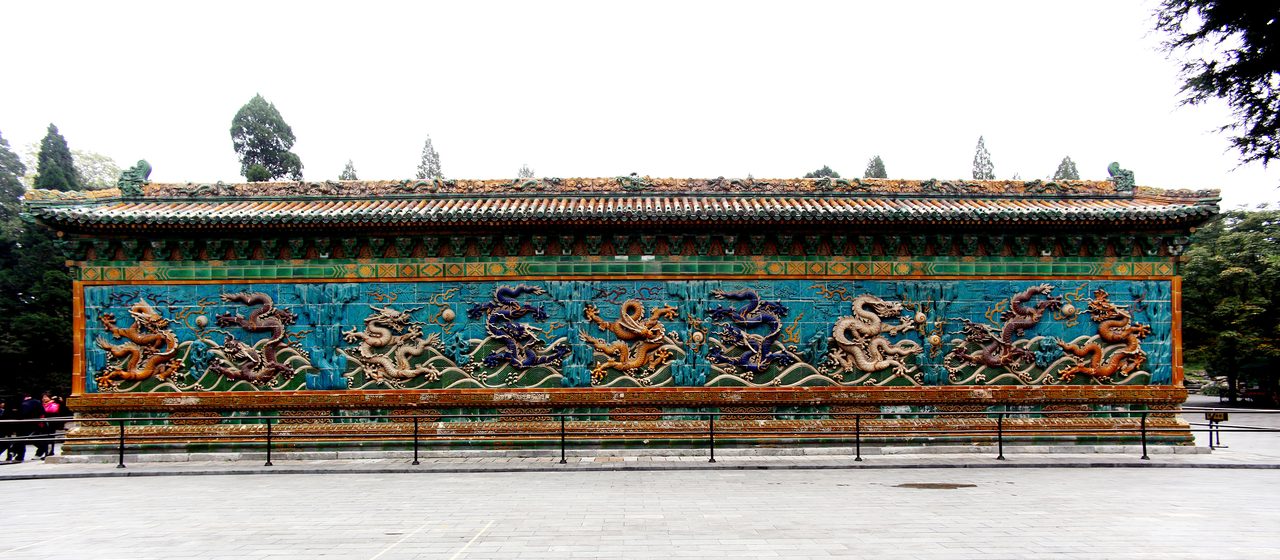
A team of dancers still carries a fabric-and-bamboo dragon down the street at Lunar New Year, and a coiled jade dragon carved around 3500 BCE sits in the National Museum of China in Beijing, older than Chinese writing itself. In between sit rain petitions and Dragon King temples, an imperial throne, a claw-count written into sumptuary law, six new sacrificial pits opened at Sanxingdui between 2021 and 2024, and a festival UNESCO inscribed in 2009. This file takes the Chinese dragon on its own terms rather than through anybody else's dragon: what the sources say it is for, what the archaeology can carry, where the scholars genuinely disagree, and the readings the evidence rules out. Every claim wears its tier.
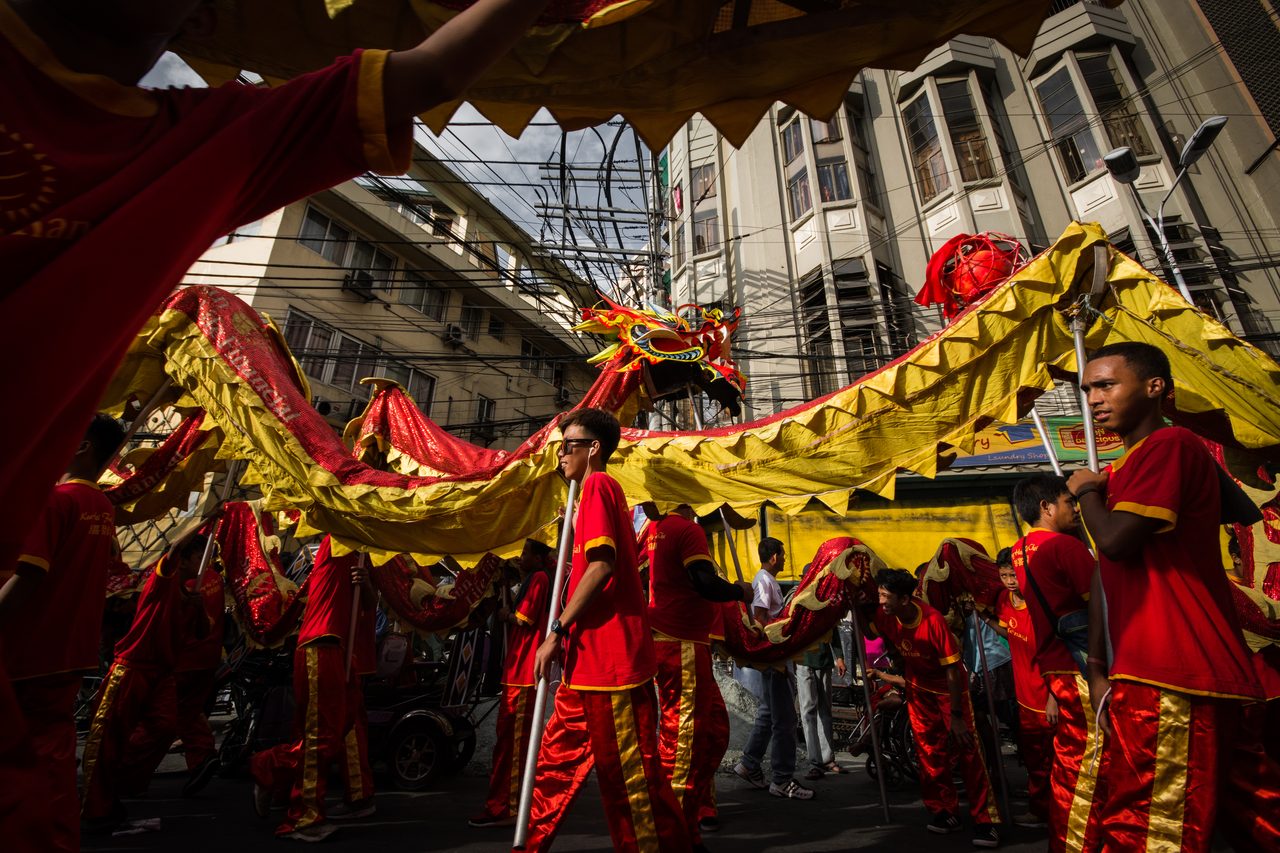
Start with the fact that matters most and gets left out most often: this one is not over. A team of dancers still carries a long fabric-and-bamboo dragon body on poles at Lunar New Year, in Chinatowns and diaspora communities around the world, and it is a marker of community identity rather than a historical re-enactment. The Dragon Boat Festival is still raced. The dragon is still the sign people plan a birth around. Now go the other way. The oldest dragon anyone has dug out of Chinese ground is a coiled jade carving from around 3500 BCE, and it pre-dates the Shang dynasty by roughly two thousand years, which means dragon imagery in China is older than Chinese writing. Between those two ends sit the rain petitions, the Dragon Kings, the throne of an empire, and a bronze serpent-dragon over three metres long pulled out of a Sichuan pit in the last few years. This file walks that span claim by claim. One note on spelling before we start: Chinese names here are given in pinyin, without tone marks, used consistently throughout. The dragon itself is long in that system, and where that word would read strangely in an English sentence we simply say the Chinese dragon.
01What The Dragon Is For
Across the textual and the visual evidence together, the Chinese dragon does four jobs, and they recur so consistently that they function as a definition. It regulates weather and water, governing rain, rivers and seas. It stands for sovereignty, above all imperial authority. It carries civilization-order meaning, tied to cosmology and to directional systems. And it appears in mythic ancestry, in the dragon-descent narratives that legitimize a line. Those four are not a modern scholarly imposition. They are what the material itself keeps doing.
| Role | What It Covers |
|---|---|
| Weather and water | Rain, river and sea governance |
| Sovereignty | Political legitimacy, and above all imperial authority |
| Civilization and order | Cosmology and directional systems |
| Ancestry and legitimacy | Dragon-descent narratives attached to ruling lines |
And here is the point that makes this tradition worth a file of its own. The Chinese long is predominantly auspicious: rain-linked, imperial, protective, cosmological. Many serpent motifs elsewhere in the world were demonized late, well after they were first carried; this one was not. Chinese dragon traditions preserve one of the strongest positive serpent and dragon complexes anywhere in our research library. Note the word predominantly. Our file says predominantly and not universally, and we are keeping it that way, because the exceptions are real and this article names them further down.
The next step past that description is a comparative argument, and it sits a tier lower on purpose. Because Chinese dragon symbolism in imperial contexts is legitimizing and protective rather than demonic, our file treats the Chinese case as a control case against the assumption that serpents are uniformly evil in world tradition, and as support for the broader claim that major serpent traditions were often positive before a selective moral inversion happened in other historical settings. That is an interpretation of a body of evidence, not a measurement, and it belongs at Tier 2. This article is also not the place where that comparison gets run. Our Dragon Typology dossier owns the cross-cultural survey of dragon types, and The Serpent-God Pattern owns the multi-civilization table. What follows here is the Chinese tradition on its own terms.
02Rain, Rivers, And The Dragon Kings
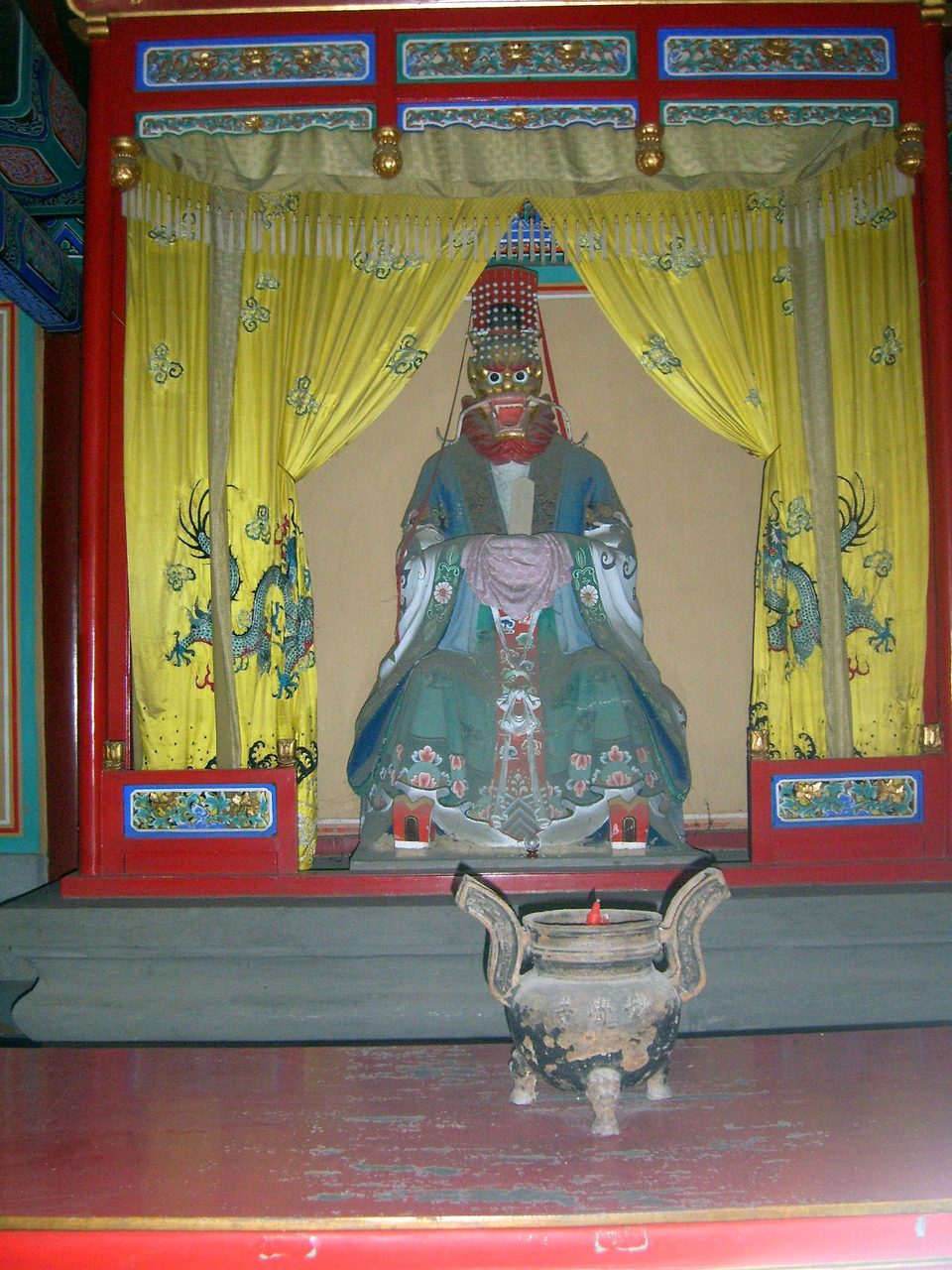
The water job is the oldest and the most practical of the four. Dragon deity traditions are tied tightly to rain petitions, to drought response, and to local temple rites, and the Dragon Kings, the Longwang, are the figures who carry that role. They are not a single deity. They are attached to specific seas and specific directions inside a system of ritual geography, and the Four Seas and Five Directions frameworks show how durably local cult practice was integrated with large-scale cosmology. Water governance and rain distribution are central to the cult, not a decorative attribute of it. When people want rain, there is somewhere specific to go and someone specific to ask.
The directional systems go further than the seas. Dragons assigned to east, south, west and north, with centre variants, line up with the broader five-phase thinking, the wuxing, and with the cardinal cosmology patterns that run through Chinese thought generally. That alignment is a reading of how the schemes fit together rather than a documented statement of intent by anyone who built them, so it sits at Tier 2. It is a good reading. It is not a proof.
03The Dragon On The Throne
Imperial dragon imagery is structural to Chinese state cosmology rather than decorative on top of it. Dragon-throne symbolism and palace art put the creature at the centre of how power described itself, and in the later dynasties the imagery carried encoded rank: the claw-count conventions marked political legitimacy and position. This is the part of the tradition most people have seen without knowing what they were looking at. The dragon on the robe, on the tile, on the seat, is doing constitutional work.
And now the unflattering half of the same fact, which our file states plainly rather than burying. Dragon symbolism was actively promoted by imperial ideologies. The dragon status of the emperor was state propaganda, not folk religion that organically grew into politics, and different dynasties manipulated dragon iconography to suit themselves. The famous five-clawed restriction, five claws reserved for the emperor with lower-ranking officials limited to four or three, was a sumptuary law. It was a rule about who may wear what. It was not a cosmological principle, and treating it as one flatters the state that wrote it.
04The Books That Anchor It
Two texts do most of the load-bearing. The Shan Hai Jing, the Classic of Mountains and Seas, has early strata likely pre-Qin with a Han-period redaction history, and its importance for dragon and serpent continuity is its format: it binds landscape, strange beings and sacred order into a single frame, a mythic geography that is also a creature catalogue. The Huainanzi, of the 2nd century BCE, is the strong witness for Han-dynasty cosmological synthesis, and it is where the directional and colour dragon schema and the large-scale ordering of heaven and earth get systematized. Between them they bridge inherited myth and state philosophy.
The Shan Hai Jing is not one book, and its own seams are visible. Chapters 1 to 5, the Wuzang Shanjing, are systematic mountain geography from roughly the 4th to 3rd century BCE and are the most realistic section. Chapters 6 to 9 and 10 to 13 cover the lands and peoples beyond and within the seas, roughly 3rd to 2nd century BCE. Chapters 14 to 17, the Dahuang Jing, are the mythological core, roughly 2nd century BCE, and chapter 18 gives genealogies of mythological figures. The earliest known reference to the text is by Sima Qian, in the Shiji around 100 BCE, and he mentions it skeptically. The received text rests on the edition by Liu Xiang and Liu Xin, father and son, who catalogued the Imperial Library around 26 BCE, and Guo Pu, 276 to 324 CE, produced the standard commentary and illustrations that have shaped every reading since.
The scale of the thing is worth stating because it explains why it survived as a reference work. The mountain chapters survey 26 mountain ranges containing 447 named mountains, each entry following the same formula: the mountain's name and its distance from the last one, its flora and their medicinal or magical properties, its fauna, often composite or extraordinary, its minerals, jade and gold and iron and cinnabar among them, the waterways rising from it, the resident deity or spirit if there is one, and the sacrifices to be performed. Across the whole text roughly 450 distinct creatures are catalogued, many of them chimeric, divine or ominous. This is a gazetteer as much as a myth book.
And here is the exception the benevolence argument has to survive, from inside the same text. Xiangliu is a nine-headed serpent, minister of the chaos deity Gong Gong, and the Shan Hai Jing describes it as toxic, leaving poison swamps wherever it goes. That matters for how carefully this article's central claim is stated. The auspicious reading is about the dragon, the long, specifically. It is not a claim that every serpentine being in Chinese mythology is positive, because the same catalogue that anchors the dragon material also preserves a clearly malevolent serpent. Most, not all, and the text itself is the witness.
Our file also puts a warning on its own material, which is unusual enough to repeat. Dragon motifs appear right across a broad early and medieval Chinese textual ecosystem, in mythic historiography, in ritual compilations, in later commentarial systems, and the temptation is to reach for whichever passage is most vivid. The file's own advice for production use is to prioritize stable passages and to avoid over-extending late folkloric layers as if they were early evidence. A Ming-dynasty story about a Han-dynasty dragon is a Ming-dynasty story.
05The Serpent-Bodied Pair
Fuxi and Nuwa are the serpent-bodied creator pair at the front of Chinese mythic history, and the first thing to know about them is that they were not originally a pair. The earliest known textual attestation of Fuxi is the Chu Silk Manuscript of around 300 BCE, the oldest surviving Chinese manuscript written on silk, where he appears as Baoxi, a cosmogonic figure who ordered heaven and earth. Nuwa appears independently, in the Chu Ci, the Songs of Chu, around the same date: 'Nuwa had a body, who formed and fashioned it?' Fuxi is a solitary culture hero in the earliest sources. Nuwa is a creator and repairer. Their combination as a married pair is a later development that only becomes standard by the Han dynasty.
Nuwa's own cycle is a repair job on a broken universe, and the fullest telling is in chapter 6 of the Huainanzi. The four pillars supporting the sky collapsed and the nine provinces cracked. Heaven no longer covered everything, earth no longer supported everything, fires raged, floods surged, wild animals devoured the people. Nuwa performed four acts. She smelted five-coloured stones and patched the broken sky. She cut off the legs of a giant turtle to serve as four new pillars. She killed the black dragon to save the land of Ji, in central China. And she accumulated reed ashes to stop the flooding waters. Afterwards, in the text's own summary, heaven was rounded and earth was squared: order restored. The tilted sky, high in the northwest and low in the southeast, is offered as the reason Chinese rivers flow east. Note the third act. A dragon is killed in this story, by the creator, to save a country. The tradition is not sentimental about its own animals.
Visually the pair is unmistakable, and Han-dynasty and later programs return to it constantly: human upper bodies, serpent or dragon tails intertwined below. The pairing encodes civilization-order, marriage and social order, cosmological balance, and culture-hero authority all at once. In the fully developed type each figure holds an implement. Fuxi holds a carpenter's square, ju, standing for earth, measurement and order. Nuwa holds a compass, gui, standing for heaven, circularity and cosmic rotation. Between them the sun often appears, containing a three-legged crow, and the moon, containing a toad or a rabbit.
These are not floating art-historical generalities. They have addresses. The Astana Cemetery at Turfan, in Xinjiang, has yielded painted silk banners of Fuxi and Nuwa with intertwined tails, laid on the chest of the deceased, with over thirty examples excavated, dating to around the 7th century CE. The Wuliang Shrine in Shandong, of around 151 CE, carries stone relief carvings of the pair with intertwined tails. And at Mawangdui in Hunan, around 168 BCE, a T-shaped silk banner shows intertwining serpentine figures that some scholars read as Fuxi and Nuwa, an attribution our file flags as an interpretation rather than a certainty. We keep that flag.
There is a resemblance across the world that has been noticed by serious people and never explained. The Fuxi and Nuwa motif, human torsos with intertwined serpent tails, looks strongly like the two intertwined serpents on the Gudea Libation Vase, a Sumerian original of around 2100 BCE associated with Ningishzida, which predates the Han-dynasty Chinese depictions of roughly 200 BCE to 200 CE by some 1,900 years. Rawson in 2017 and Wu Hung in 1989 both noted the similarity. Nobody has identified a transmission mechanism. The candidates are Silk Road diffusion, convergent symbolism with two intertwined forms simply being an obvious way to picture cosmic duality, or a deep shared mythological substrate. Each tradition is Tier 1 on its own. The link between them is Tier 3, speculative, and stays there until something material turns up.
06Older Than The Writing
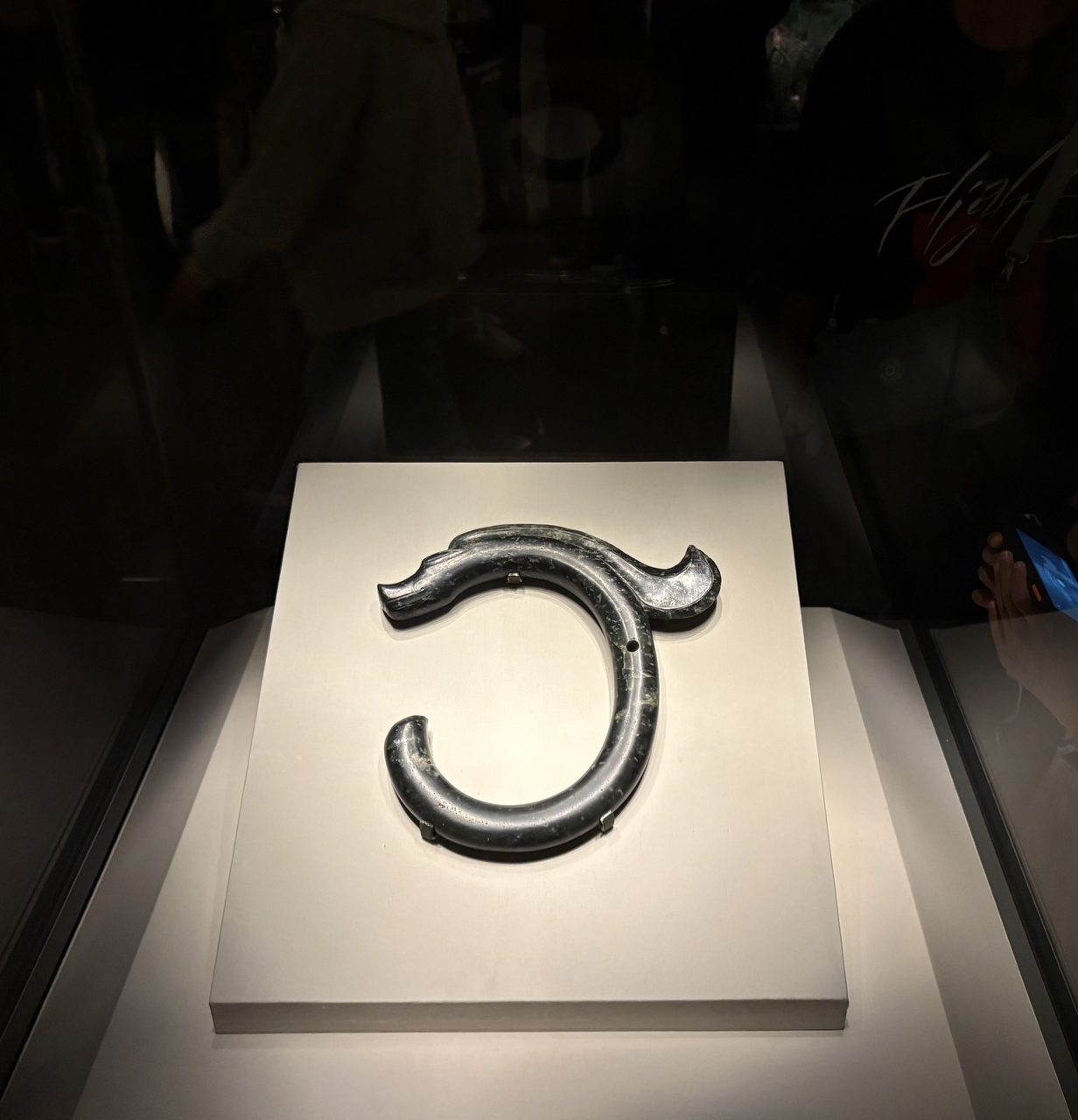
The C-shaped jade dragon of the Hongshan culture, the zhulong or yulong, dates to approximately 3500 BCE and is one of the earliest known dragon-form artifacts in China. It comes from the Hongshan culture area of Inner Mongolia and Liaoning, in the north, which makes it a tradition separate from both the Yellow River material and the Sichuan Basin material, and it now sits in the National Museum of China in Beijing. It pre-dates the Shang dynasty by roughly two thousand years. Put that plainly: dragon imagery in China is older than Chinese writing. The symbol was already in the ground before there was any way to argue about it.
What the Hongshan carver thought he was carving is a live argument. The pig-dragon debate, over whether the artifact's zoological referent is a pig, a bear or a dragon, is genuinely unresolved, and our file does not pretend otherwise. What is not in dispute is the shape itself: the serpentine, coiled C is unmistakable, whatever head was intended to sit on it.
Then there is Sanxingdui, at Guanghan in Sichuan, which is doing more to change this picture than anything else in the last century. It is a Bronze Age site, first discovered in 1929, with major pits found in 1986. Between 2021 and 2024 six new sacrificial pits, Pits 3 to 8, were excavated, yielding thousands of artifacts and transforming the understanding of ancient Chinese religion. This is not old scholarship being re-argued. It is a site actively being dug in the years this article was written.
What came out of those pits is extraordinary and specific. Bronze serpent-dragon figures, some exceeding three metres in length. A large bronze divine tree, the Tongtian Shenshu, previously excavated at 3.96 metres with a serpent or dragon coiling up its trunk, had further tree fragments recovered in the new pits. Bronze human-serpent hybrid figures. Jade serpentine forms. Alongside them, gold, elephant tusks, and burned silk offerings. The serpent-dragon is not a minor motif at this site. It is part of the furniture of the ritual.
Sanxingdui was an independent Sichuan Basin civilization, the ancient Shu state, with its own serpent-divine iconography, separate from the Yellow River traditions documented in the Shan Hai Jing, and it pre-dates most of the canonical Chinese mythological texts, sitting in the Bronze Age at roughly 1200 to 1000 BCE. The scale is enormous: over 13,000 artifacts from the new pits alone.
And that is where the interpretation comes in, one tier down. Sanxingdui challenges a centralized, single-origin dragon narrative. Read together with the northern Hongshan jade, it suggests multiple independent dragon and serpent traditions inside ancient China rather than one lineage radiating out from the Yellow River. That reading is our file's own, explicitly at Tier 2, and it is worth holding lightly. The artifacts are Tier 1. What they prove about the shape of Chinese religious history is an argument in progress.
| Tradition | Where | When | What Survives |
|---|---|---|---|
| Hongshan | Inner Mongolia and Liaoning, northern China | Around 3500 BCE | The C-shaped jade dragon, zhulong or yulong, now in the National Museum of China |
| Sanxingdui, the ancient Shu state | Guanghan, Sichuan Basin | Roughly 1200 to 1000 BCE | Bronze serpent-dragons, some over three metres, and a bronze divine tree with a serpent coiling its trunk |
| The Yellow River textual tradition | Recorded in the Shan Hai Jing and later texts | Early strata likely pre-Qin, redacted under the Han | Mythic geography plus a catalogue of roughly 450 creatures |
Widen out from those three and the classes of surviving visual evidence line up in a single sequence: Neolithic and early jade dragon forms, the Hongshan C-shaped types among them; bronze and relief dragon forms, including the Sanxingdui corpus; Han tomb iconography, where the serpent-bodied Fuxi and Nuwa pairings live; imperial textiles, ceramics, throne and architectural motifs; and canonical art references such as the Nine Dragons tradition. The dragon is one of the few subjects in Chinese material culture you can follow continuously from a Neolithic grave to a palace roof.
07The Nine Sons, And Where They Sit
The Nine Sons of the Dragon, the Longsheng Jiuzi, are a piece of traditional taxonomy rather than a historical record, and the tier reflects that. The tradition names nine distinct dragon offspring, each with its own form and nature and, crucially, each with a specific architectural or material job. It was first systematized in the Ming dynasty, though individual elements appear earlier. Read the list as a map of where the dragon was allowed to live rather than as a genealogy, and it becomes one of the best single demonstrations of how deeply the imagery was woven into architecture, weaponry, religion and governance at once.
| Name | Form | Where It Sits |
|---|---|---|
| Bixi | Turtle-dragon | Stele bases |
| Chiwen | Fish-dragon | Roof-ridge ends |
| Pulao | Small roaring dragon | Bell handles |
| Bi'an | Tiger-dragon | Prison gates |
| Taotie | Greedy beast | Bronze-vessel faces |
| Baxia | Water-loving dragon | Bridge supports |
| Yazi | War-loving dragon | Sword guards |
| Suanni | Lion-dragon | Incense-burner bases |
| Jiaotu | Conch-dragon | Door knockers |
08Where The Dragon Came From, If Anywhere
Mainstream sinology has an origin account, and our file gives it a full hearing rather than a token paragraph. Roel Sterckx, Lust and Mark Edward Lewis are the names attached to it. On this reading Chinese dragon iconography evolved out of composite animals: crocodilians, specifically the Yangtze alligator, Alligator sinensis, large snakes, and weather phenomena including waterspouts, tornadoes and lightning. The progression is traceable in the archaeological record itself, from the snake-like forms of Neolithic jade, the Hongshan C-shaped dragon of around 3500 BCE, to the composite multi-featured dragon of Han art from roughly 200 BCE onward. The dragon gets more parts as it gets later.
The crocodilian leg of that argument is the most concrete and the most interesting. The Yangtze alligator was historically widespread across central and eastern China, and it bellows during the spring rains, which is about as direct an association between a reptile and the arrival of water as an environment can hand a culture. Sterckx argues that the earliest dragons were likely descriptions of real animals, gradually mythologized as the ecological knowledge behind them was lost, once human settlement had pushed the crocodilians out to marginal habitats. Read the tier carefully. This is a credible, named argument about where an image came from. It is not a finding.
Which is the moment to say the thing this whole file rests on. A tradition is evidence about what people believed and transmitted. It is never evidence that the thing described exists. The jade is real, the bronzes are real, the texts are real, the festivals are real, and every one of them is a fact about human beings. And notice what is absent from the naturalistic case above: there is no fossil in it, no surviving dinosaur, no lost megafauna. If you want to argue that the Chinese dragon is a memory of a real large animal, the only version of that argument our research file actually carries is Sterckx's, and Sterckx's animal is a crocodilian that is still alive.
There is one more origin claim to close off, and it is the one that gets made loudest. Chinese dragon traditions developed independently of Near Eastern serpent traditions. No archaeological, genetic or textual evidence connects Chinese long traditions to Sumerian or Egyptian serpent traditions before the Silk Road, around the 2nd century BCE. The resemblances that people reach for, water association, wisdom, royalty, are best explained by convergent symbolism: cultures living beside rivers independently associate serpentine creatures with water, and control of water with power and kingship. Our World Serpent dossier carries the wider cross-cultural version of that kingship pattern.
That independence cuts two ways at once, and our file is honest about the paradox. The Chinese case is the strongest example anywhere of serpent symbolism developing on its own, which supports the idea that serpent reverence is something the human mind reaches for repeatedly, and which simultaneously undermines the idea that it requires a single historical source or a point of transmission. Both halves of that sentence are the same evidence. If the pattern is real and the transmission is not, the explanation has to be about us.
09The Dragon Now
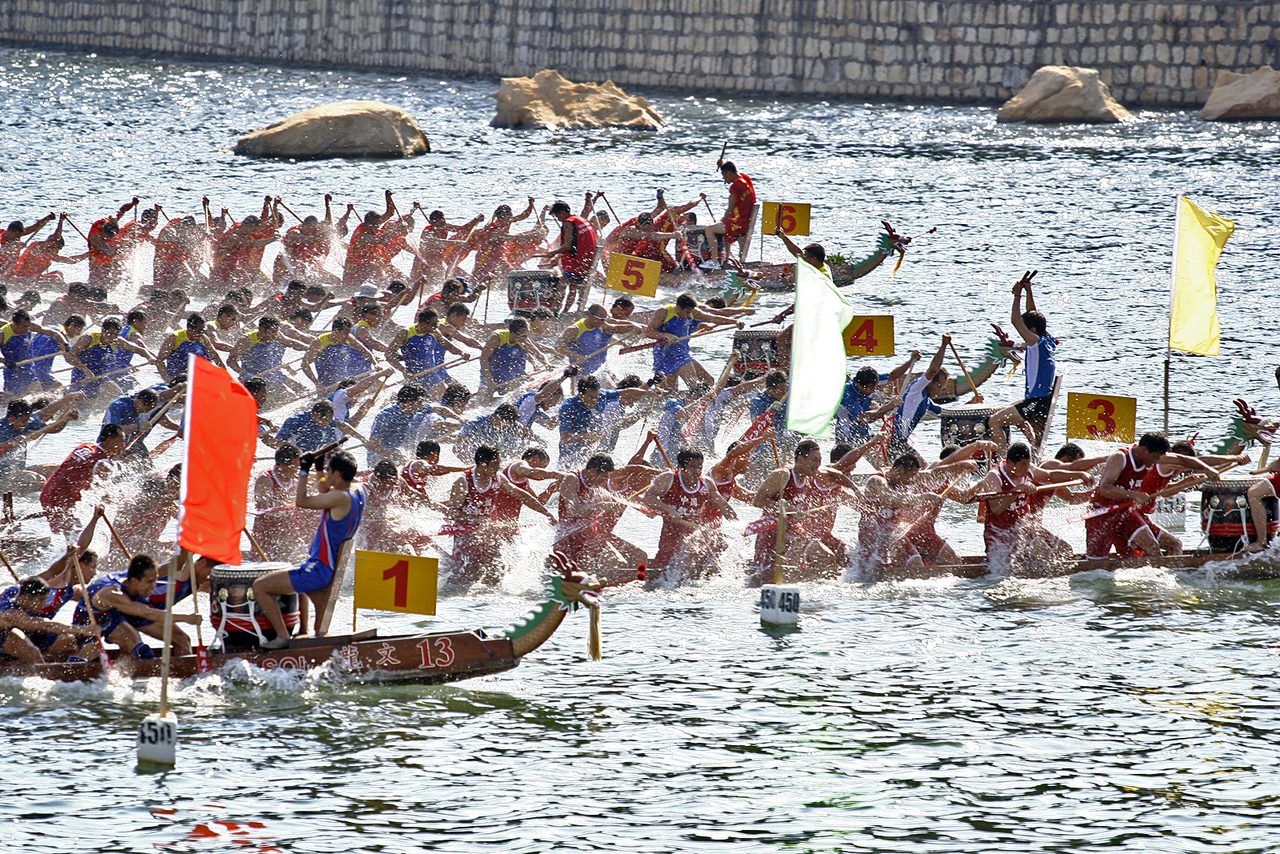
The Dragon Boat Festival, Duanwu Jie, falls on the fifth day of the fifth lunar month and commemorates Qu Yuan, a poet and statesman of the Chu state, roughly 340 to 278 BCE, in the Warring States period. He drowned himself in the Miluo River in 278 BCE after being exiled, following the fall of the Chu capital to the state of Qin. Tradition holds that people rowed out to search for his body, beat drums and splashed the water to keep the fish away, and threw rice into the river, which later developed into zongzi, rice dumplings wrapped in leaves. That, by popular tradition, is where the racing and the food both come from. On 30 September 2009 the Dragon Boat Festival became the first Chinese festival inscribed on UNESCO's Representative List of the Intangible Cultural Heritage of Humanity.
The dragon dance, which is a different thing from the lion dance and worth not confusing, is a living performance tradition: a team of dancers carries a long fabric-and-bamboo dragon body on poles, most visibly at Lunar New Year. It is not a historical curiosity that gets revived for tourists. It remains a standard, actively performed marker of Chinese community identity in Chinatowns and diaspora communities worldwide.
And then there is the zodiac, where the dragon is the only wholly mythical creature among the twelve animals and is widely regarded as the most auspicious sign of the set. That belief shows up in demographic data. China's birth rate rose from 13 to 15 per 1,000 people in the Dragon Year of 2012, then fell back to 13 in 2013. In the most recent Dragon Year, 2024, China recorded 9.54 million newborns, an increase of 520,000 over the previous year.
Whether the zodiac itself is what moved those numbers is a separate question, and the honest answer is that nobody has isolated it. Demographers and state media have widely attributed the pattern to couples timing childbirth to the Dragon Year, but the sources reporting the most recent rise name several causes at once: a post-pandemic rebound in marriage registrations, government childbirth-support policy, and the cultural pull of the Dragon Year. The statistics are Tier 1. The causal attribution to zodiac belief specifically is Tier 2, because it has never been separated from the factors sitting alongside it.
The most revealing modern use of the symbol is not ancient at all. 'Descendants of the Dragon', Long de Chuanren, is a song written in 1978 by the Taiwanese songwriter Hou Dejian, as a reaction to the announcement that the United States would extend official diplomatic recognition to the People's Republic of China. It was first recorded by Li Jianfu, then a university student, and released in 1980, and it became one of the most popular pop songs ever released in Taiwan, and then in mainland China too after Hou emigrated there in 1983. The phrase is now used across the mainland, Taiwan and the global Chinese diaspora as a self-referential marker of shared ethnic and cultural identity, which positions the dragon as a civilizational symbol rather than a purely religious or mythological one. Hou Dejian himself has said that the song's later use as an expression of pro-PRC political sentiment was not what he intended. A creature that was already being carved in jade before anyone in China could write acquired a new job in 1978, and the man who gave it that job has spent decades disowning what happened next.
10What The Chinese Dragon Actually Demonstrates
Our file ends its own analysis with a refusal, and it is worth quoting the shape of it exactly. Chinese dragon material is not evidence for ancient alien visitors, not evidence for a single lost civilization, and not evidence for cross-cultural transmission from Sumeria. It is strong evidence for three other things: how a cultural symbol evolves across millennia, how natural phenomena, real animals and real weather, generate mythology, and how political power co-opts religious symbols. That is the whole trade. You give up the aliens and you get a working model of how symbols are made and then captured, which is the more useful object anyway.
Two adjacent claims fall with it. Reading the chimeric beings of the Shan Hai Jing as literal alien species visiting ancient China is anachronistic and unsupported by the text's own internal logic, which consistently treats those beings inside a cosmological and mythological frame rather than an extraterrestrial one. And the claim that the Shan Hai Jing is a survival manual from Atlantis or Lemuria has no textual, archaeological or linguistic basis at all; the text is firmly rooted in the Chinese literary and ritual tradition it came out of.
One more, because the image is so striking that the claim keeps getting made about it. The intertwined tails of Fuxi and Nuwa are not a depiction of the DNA double helix. The double-helix structure was not discovered until 1953, and there is no evidence that any ancient culture possessed molecular-biology knowledge. The intertwined form is far more naturally explained by the mating posture of actual serpents, by the visual symbolism of two becoming one, or by cord and rope twisting, which is an observable premodern manufacturing technique. The same claim is made about the Sumerian intertwined serpents, and our Ningishzida dossier refuses it there on the same grounds.
Fast Facts
- Oldest known dragon artifact
- A C-shaped Hongshan jade dragon, the zhulong or yulong, around 3500 BCE, from the Hongshan culture area of Inner Mongolia and Liaoning, now in the National Museum of China
- Older than writing
- It pre-dates the Shang dynasty by roughly 2,000 years, which puts dragon imagery in China ahead of Chinese writing
- The anchor texts
- The Shan Hai Jing, early strata likely pre-Qin with a Han redaction, and the Huainanzi of the 2nd century BCE
- Sanxingdui, still being dug
- Six new sacrificial pits, Pits 3 to 8, excavated between 2021 and 2024; over 13,000 artifacts from the new pits alone; bronze serpent-dragons some over three metres
- The claw rule
- Five claws reserved for the emperor, lower officials limited to four or three. A sumptuary law, not a cosmological principle
- The exception that keeps us honest
- Xiangliu, the nine-headed poison serpent of the Shan Hai Jing. The auspicious reading is about the dragon specifically, not every Chinese serpent
- Still living
- The Dragon Boat Festival was the first Chinese festival on UNESCO's Intangible Cultural Heritage list, inscribed 30 September 2009; the dragon dance is still performed worldwide
- Ruled out
- Ancient alien visitors, a single lost civilization, transmission from Sumeria before the Silk Road, and the DNA double-helix reading of the Fuxi and Nuwa tails
What We Can Actually Stand Behind
The dragon's antiquity, its objects, its texts and its living practice are all solid ground. The Hongshan jade of around 3500 BCE is a real object in a real museum. Sanxingdui is a real site with six new pits opened between 2021 and 2024 and over 13,000 artifacts from those pits alone, including bronze serpent-dragons over three metres long. The Shan Hai Jing and the Huainanzi are real texts with a documented transmission history, down to Liu Xiang and Liu Xin around 26 BCE and Guo Pu's commentary of 276 to 324 CE. The Fuxi and Nuwa iconography has named findspots at Astana, at the Wuliang Shrine and at Mawangdui. The four functions, water, sovereignty, cosmic order and ancestry, are what the evidence consistently shows the dragon doing. And the living half is just as documented: the Dragon Boat Festival's UNESCO inscription in 2009, the dragon dance still performed, the 1978 song that turned the creature into a marker of shared identity.
Several real questions stay open and this file marks them. Where the dragon image came from is the biggest: the composite-animal account, crocodilians and snakes and weather, argued by Sterckx, Lust and Lewis, is the leading explanation and it is a credible named argument rather than a finding. Whether Sanxingdui and Hongshan together genuinely overturn a single-origin narrative is our file's own Tier 2 interpretation of Tier 1 artifacts. Whether the Chinese case functions as a control against the assumption that serpents are uniformly evil is a comparative reading, not a measurement. The directional dragon and wuxing alignment is a fit between two schemes rather than a stated intent. And whether the zodiac is what actually moves China's Dragon Year birth numbers has never been separated from the other causes reported alongside it. One further open item is smaller and honest: what the Hongshan carver meant, pig or bear or dragon, is still argued.
Two things sit at Tier 3 and should not be promoted. The Nine Sons of the Dragon is a traditional taxonomy first systematized in the Ming dynasty; it tells you where the culture put its dragons, not where its dragons came from. And the visual resemblance between the intertwined Fuxi and Nuwa tails and the Sumerian intertwined serpents of the Gudea Libation Vase is genuine and unexplained: each tradition is Tier 1 in its own right, but any claim of transmission between them is speculative, with no material evidence for a route, and Rawson and Wu Hung both noted the likeness without asserting a link.
The Chinese dragon is not evidence for ancient alien visitors, for a single lost civilization, or for cross-cultural transmission from Sumeria. No archaeological, genetic or textual evidence connects Chinese dragon traditions to Sumerian or Egyptian serpent traditions before the Silk Road, around the 2nd century BCE. Reading the chimeric beings of the Shan Hai Jing as literal alien species is anachronistic and cuts against the text's own internal logic, which frames them cosmologically. And the claim that the Shan Hai Jing is a survival manual out of Atlantis or Lemuria has no textual, archaeological or linguistic basis whatsoever. These are not open questions being held with an open mind. They are closed.
And the intertwined tails of Fuxi and Nuwa are not a picture of the DNA double helix. The structure was not described until 1953 and no ancient culture is known to have possessed molecular-biology knowledge. Serpents intertwine when they mate, two forms twisted into one is an obvious way to picture duality, and rope-twisting was something everybody could watch being done. Any of those explains the image without requiring a civilization to have known biochemistry and then forgotten it.
So what is left when the aliens and the lost continents are taken off the table is not smaller, it is stranger. A culture picked a creature out of its rivers and its weather, carved it into jade before it could write, carved it again in bronze in a separate river valley a thousand miles away with no apparent contact between them, wrote it into a gazetteer of mountains, married it to the sky-repairing goddess who also had to kill one, put it on the throne and then made it a crime for anyone else to wear five of its claws, gave it nine sons and assigned each of them a bell handle or a bridge or a door, and is still carrying it down the street on poles, still racing boats shaped like it, still timing births to its year. Many serpent traditions elsewhere were turned into something to be feared, and our Serpent-God Pattern file runs that comparison properly. This one was not. So here is the question to carry out: if the answer is not transmission, and not a real animal in the water, what is it about rain, and about who gets to promise it, that made one civilization keep the same creature from 3500 BCE to this year's Lunar New Year and never once decide it was the enemy?
Sources & further reading
Everything above is drawn from our research library on Theories of Anything, and the primary file behind this page is C_2_06, the thinnest bibliography of any serpent-and-dragon file we have checked, at six sources. Because of that, and because our own file's sections on the Shan Hai Jing and on Fuxi and Nuwa are shorter than the dedicated files we hold on both, two further research files were read in full and used as clearly-marked supplementary sources: A_4_14 on the Shan Hai Jing and C_2_13 on Fuxi and Nuwa. Everything in section 09, the living-tradition material on the Dragon Boat Festival, the zodiac, the dragon dance and 'Descendants of the Dragon', is independently sourced rather than taken from our file, which carries no material on any of them: it rests on UNESCO's own Intangible Cultural Heritage listing, Britannica, a National Bureau of Economic Research digest on Dragon Year birth timing, published Chinese government birth statistics and contemporaneous reporting, and documented cultural history for the song. Where our file assigns a tier we have kept it, including the ranges, and where it invents a tier label that does not exist in our own four-tier framework, on the Nine Sons, we have mapped it to Tier 3 and said so rather than printing a tier that is not real. One note on citations: this page prints no DOIs or ISBNs for the works it names. Four identifiers attached to those works in our own records were checked and either confirmed or strongly suspected to resolve to something other than the work, in two confirmed cases to a review of the book rather than the book itself. The works are therefore cited by author, title, year and publisher. An absent identifier is honest; a wrong one is a defect. The named works behind the scholarly arguments on this page are Roel Sterckx, The Animal and the Daemon in Early China (2002, State University of New York Press); Mark Edward Lewis, The Flood Myths of Early China (2006, State University of New York Press); Wu Hung, The Wu Liang Shrine: The Ideology of Early Chinese Pictorial Art (1989, Stanford University Press); Anne Birrell, Chinese Mythology: An Introduction (1993, Johns Hopkins University Press); Richard E. Strassberg, A Chinese Bestiary: Strange Creatures from the Guideways Through Mountains and Seas (2002, University of California Press); Anne Birrell's translation The Classic of Mountains and Seas (1999, Penguin Classics); John S. Major and colleagues, The Huainanzi: A Guide to the Theory and Practice of Government in Early Han China (2010, Columbia University Press); and J. Xu and colleagues, 'Radiocarbon Dating of Sanxingdui', Archaeological and Anthropological Sciences 14:75 (2022).
Image credits
- Nine Dragon Wall, Beihai Park, Beijing Gisling, via Wikimedia Commons. CC BY 3.0 Source.
- C-shaped jade dragon, Hongshan culture, National Museum of China Lien Rodam TianHie, via Wikimedia Commons. CC BY-SA 4.0 Source.
- Dragon King (Longwang) shrine statue Shizhao, via Wikimedia Commons. CC BY-SA 3.0 (also GFDL 1.2+) Source.
- Dragon dance, Binondo, Manila Emman A. Foronda, via Wikimedia Commons. CC BY-SA 4.0 Source.
- Card crop of Nine Dragon Wall, Beihai Park, Beijing Gisling, via Wikimedia Commons. CC BY 3.0 Source.
- Dragon boat racing festival, Macau Iidxplus, via Wikimedia Commons. CC BY-SA 3.0 (also CC BY-SA 2.5, GFDL 1.2+) Source.


